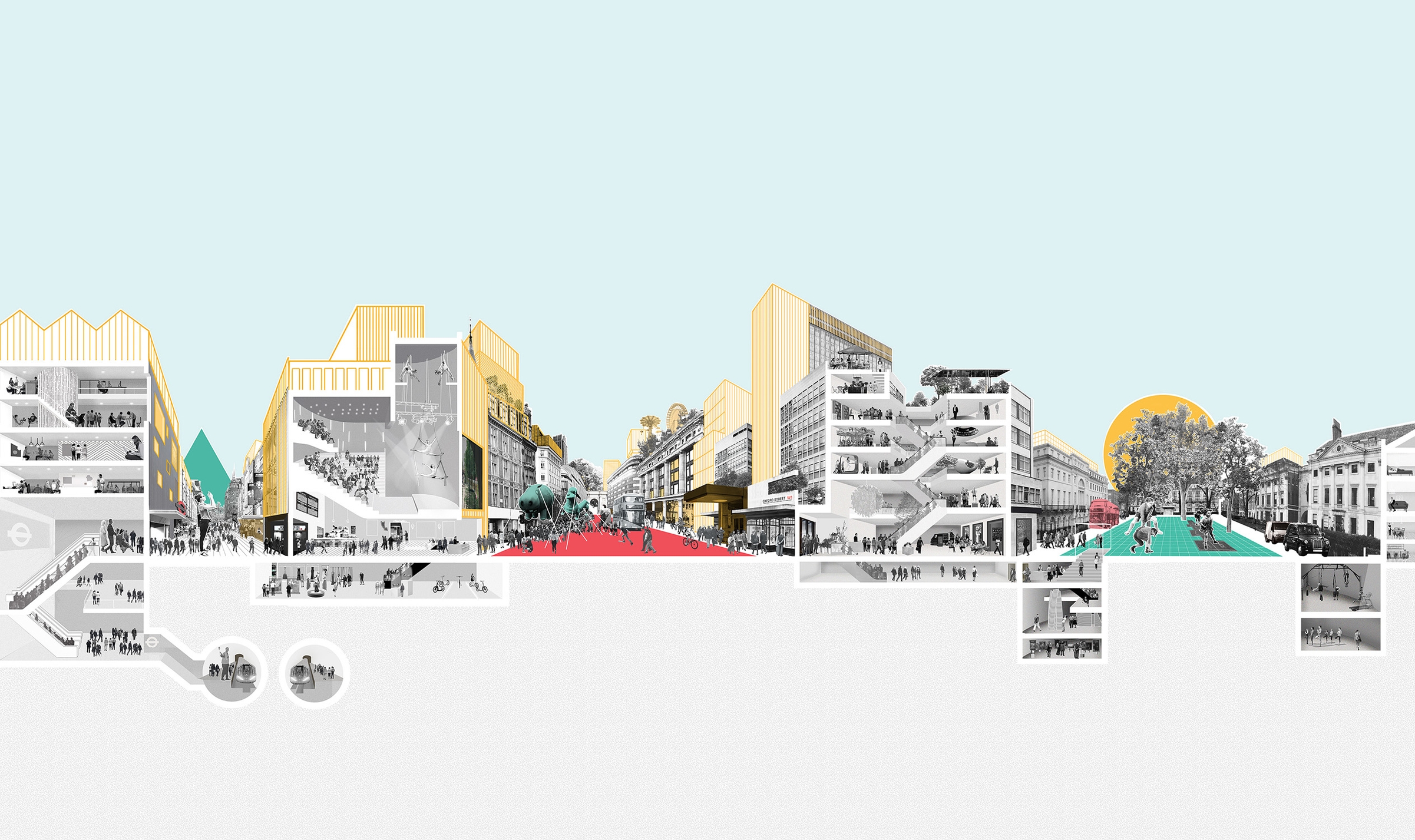
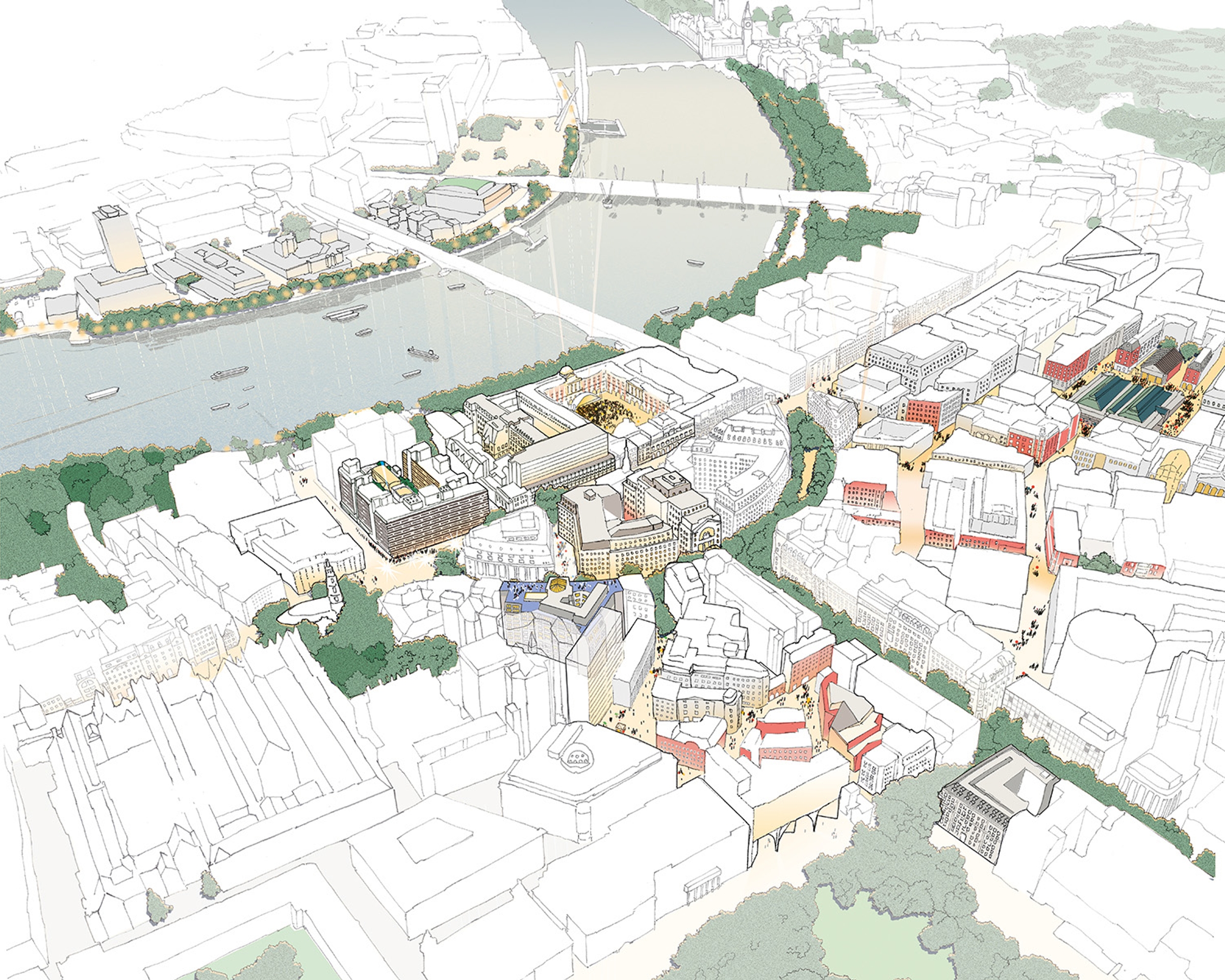
Photography by Jason Hawke
Marble Arch
Redesigning Marble Arch as a joyful, inclusive and democratic public space
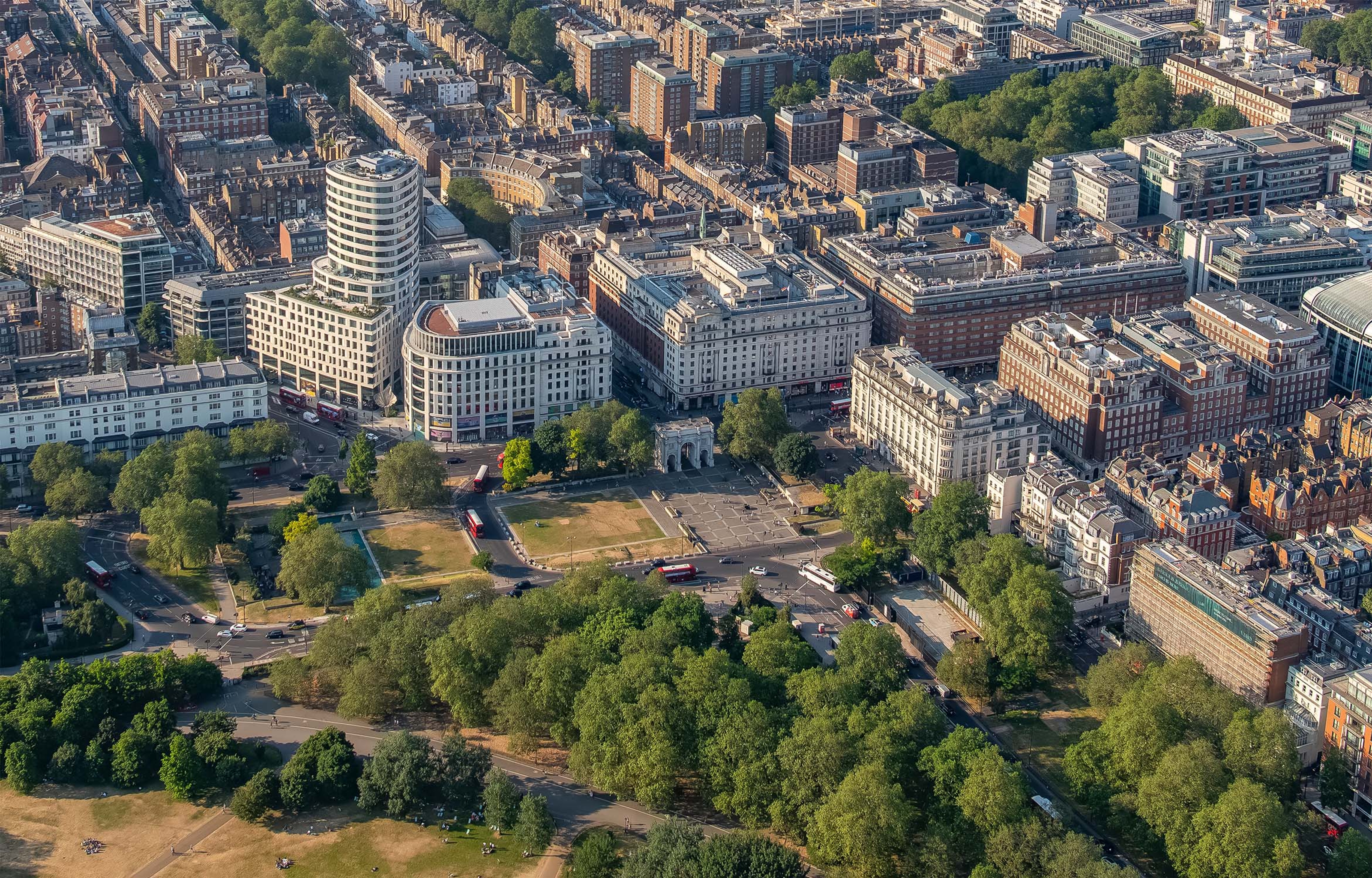
Publica and The Portman Estate have developed a radical vision to reimagine Marble Arch.
Marble Arch has long been at the heart of London’s civic identity: it stands as a symbol of public dialogue, progress, and celebration and serves the gateway to Hyde Park. It has evolved from once natural land, to defining the edge of a growing city, to becoming a civic embodiment of free speech and demonstration. Despite its special history and location, it has been overlooked and physically isolated by fourteen lanes of vehicle traffic, severed from the communities and public spaces it once connected.
Our proposal repositions the inner ring road, reconnecting Marble Arch with Hyde Park and Oxford Street and restoring the Arch’s historic position as the entrance to the Park. A new public space of 12,500 sqm will be created on par with Trafalgar Square and over 2000 sqm of carriageway will be converted into public realm. Marble Arch will become a destination capable of welcoming the 2.2 million people who visit each year.
The public space at Marble Arch will create room for people and for nature in the heart of London. A civic space with meaningful ecological value. A generous place, for all visitors. A celebration of its identities and layers, historic and future. Transport infrastructure and highways designed by NRP create an expanded area for pedestrians, safer routes for pedestrians and cyclists, and improved air-quality and traffic flows.
Marble Arch’s transformation is part of a wider constellation of change within the civic resetting of London. It represents a major opportunity to reshape the city’s public realm for the 21st century.

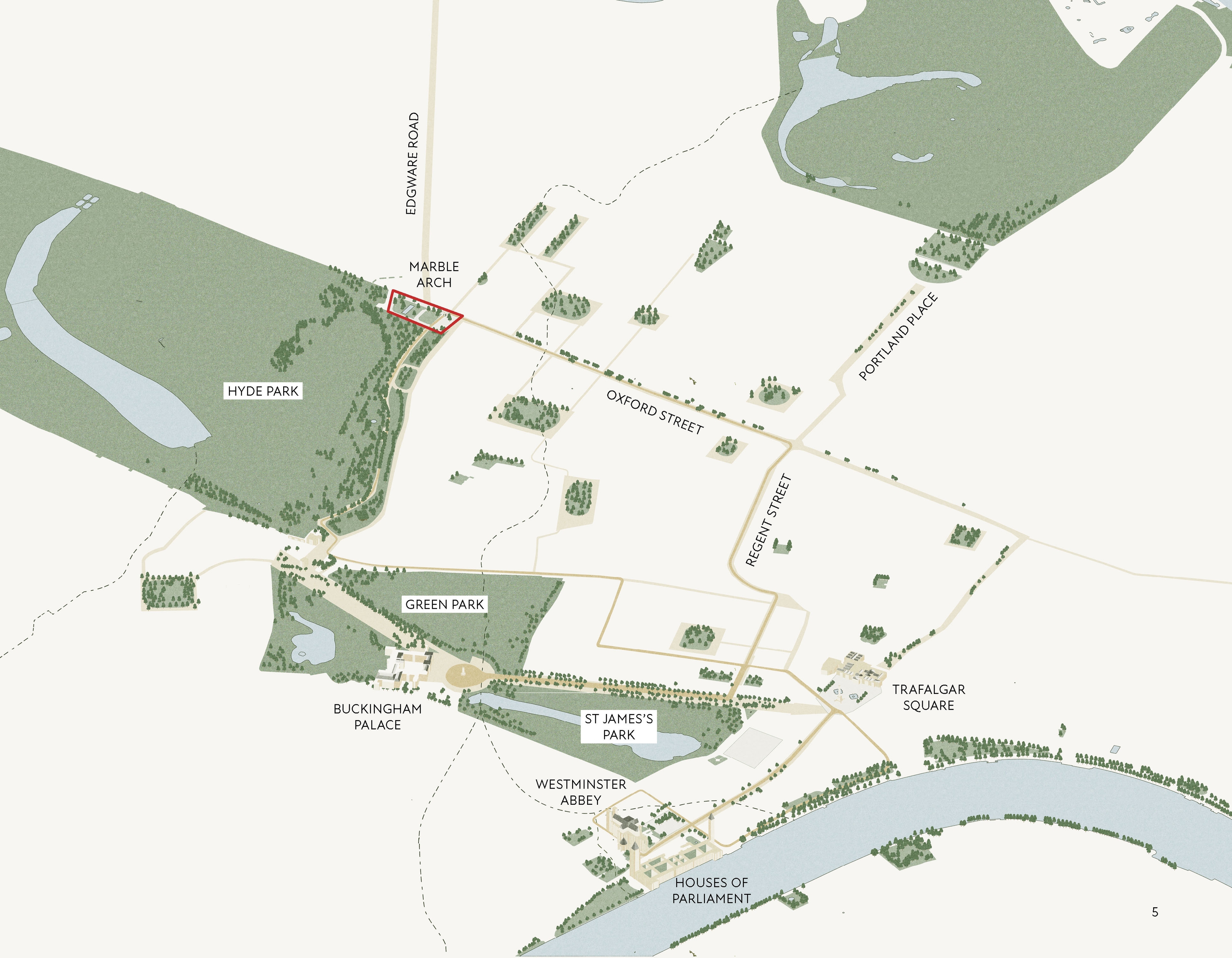
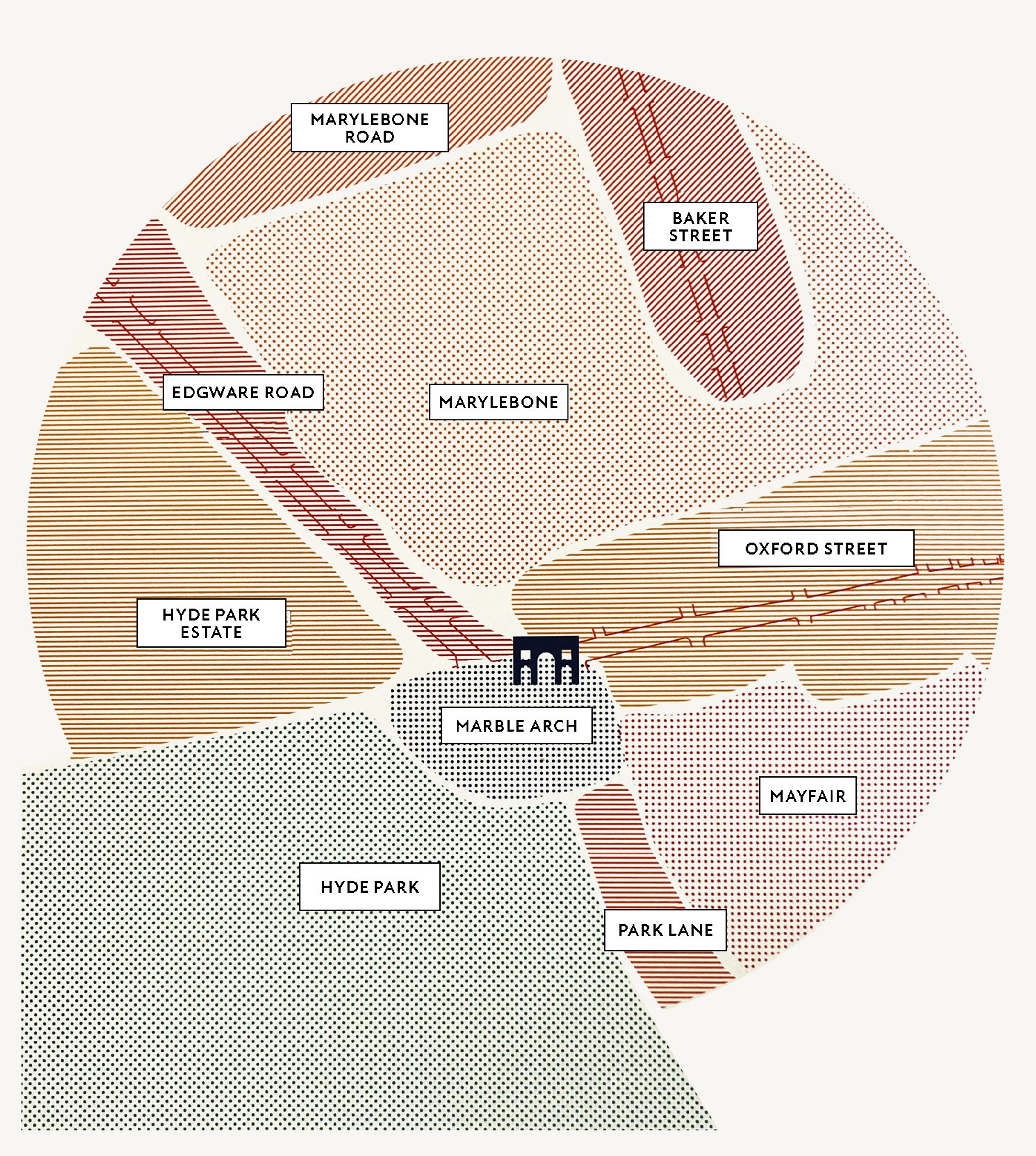
Marble Arch will join a network of large public spaces across the City of Westminster, 2025.
Publica developed an initial proposal to redesign Marble Arch’s roadway and public realm in 2019, which included the “peninsularisation” of the site. It was informed by an area study and a perceptions study, conducted by Publica between 2017 and 2018, which shared the experiences of 100 visitors to Marble Arch. The report identified the need for:
- A high-quality, civic public space for London
- Improved road safety and drive towards the GLA’s Vision Zero Action Plan
- An accessible and healthier environment with improved air quality
- A safer public realm, with improved walking and cycling connections
- Improved arrival experience, better bus connections and Underground access, step-free to ticket hall
- Activated spaces with improved amenity, natural surveillance and better management
Our latest proposal for Marble Arch responds to this complex contextual landscape with a unifying vision that follows the strategic goals set out in the 2019 report, celebrates the site’s historical legacy, and embraces the critical need for a more sustainable, safer London. It reimagines Marble Arch as a biodiverse and regenerative landscape, inviting to all while remaining a place for public expression, civic culture and memory. It will connect the park to neighbourhoods, nature and people as a beautiful and joyful, and inclusive space.
For nearly two millennia, Marble Arch has been a place where London has made and re-made itself. As a crossroads of royal tradition, political protest, environmental and infrastructural change, Marble Arch represents the complexities of modern British society.
From the Edge of the City to it’s Heart
The place where Marble Arch now stands was for many centuries the edge of a woodland. Development came slowly at first: the Romans built roads, two of which intersected at this very site. Centuries later, in medieval times, this spot was so far removed from the city that it was the chosen site for the most unseemly of activities: execution. But by the mid-18th century, London had burst beyond the narrow alleyways of the old city and was rapidly expanding westward. Today, Marble Arch marks the threshold of the West End, the nation’s economic powerhouse and a global tourist destination.
Celebration and City-Making
From royal processions to democratic demonstrations, Marble Arch has been a place that people have passed through and gathered at over the past five centuries. Giddy crowds gathered to hear the final words of Newgate’s prisoners at Tyburn; proud citizens celebrated the triumph over Napoleon in 1814 and the coronations of six monarchs; workers and reformers, then suffragettes and activists, assembled here to call for a more just future. At Marble Arch, a right to the city has been cultivated - to discuss, to disagree, to dissent, to propose, to come together, to create the city.
The Legacy of Free Speech
Near where Marble Arch stands today, thousands of people met their untimely deaths by execution. Historians estimate that up to 20,000 prisoners were executed at Tyburn from 1571 to 1783, the most active years of the gallows. While many of the prisoners were convicted of murder and other serious crimes, many were executed for what we know as more minor crimes today, such as stealing horses and hawks, libel, or counterfeiting currency. The memorial to the untold number of innocent people hanged at Tyburn is now the space that is preserved for marches, protests, discourse and discussion at Marble Arch.
Abundant Ecologies
800 years ago, when Hyde Park was under the ownership of the Benedictine monks of Westminster Abbey, it was bursting with life: marsh ecosystems flourished alongside dense woods, providing a home for insects, boars, deers, hedgehogs and birds. The abundant game made it an excellent Royal hunting ground, from the 16th century onward. Over time, it became a place of artistic and intellectual inspiration and respite from an increasingly industrialised city. Even with more traffic along its edges in the 20th century, Hyde Park has remained a refuge for birds and other wildlife and a lush, green heart in the city. As a reinstated formal entrance to this haven for nature, can be a symbol of the resilience and re-wilding that is critical in the face of the climate emergency.
Marble Arch’s history demonstrates how public space is where our cities are made, through dialogue, celebration, pride, liberty, protest and grandeur. It shows London’s need for a central space for civic engagement and collective remembrance.
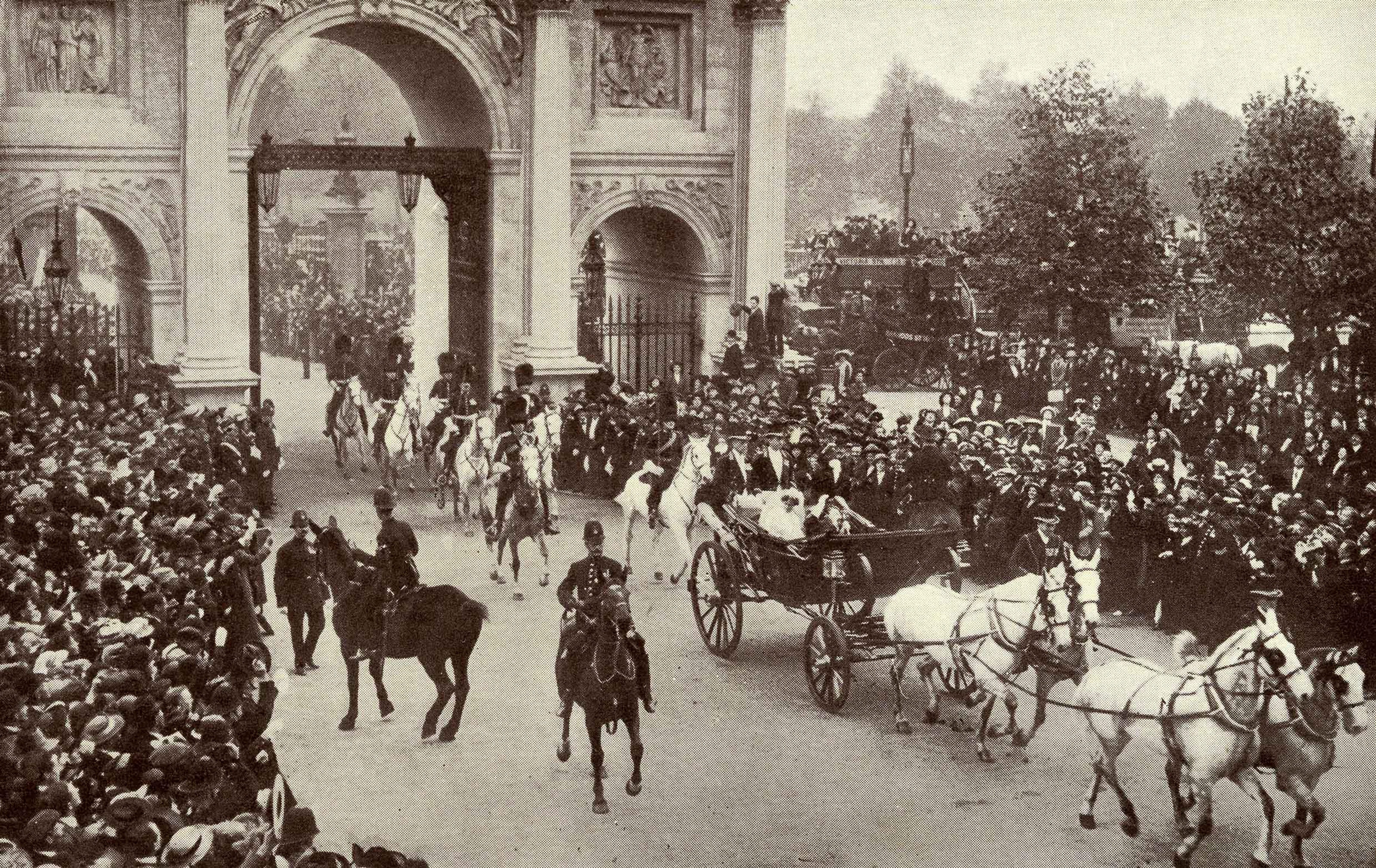
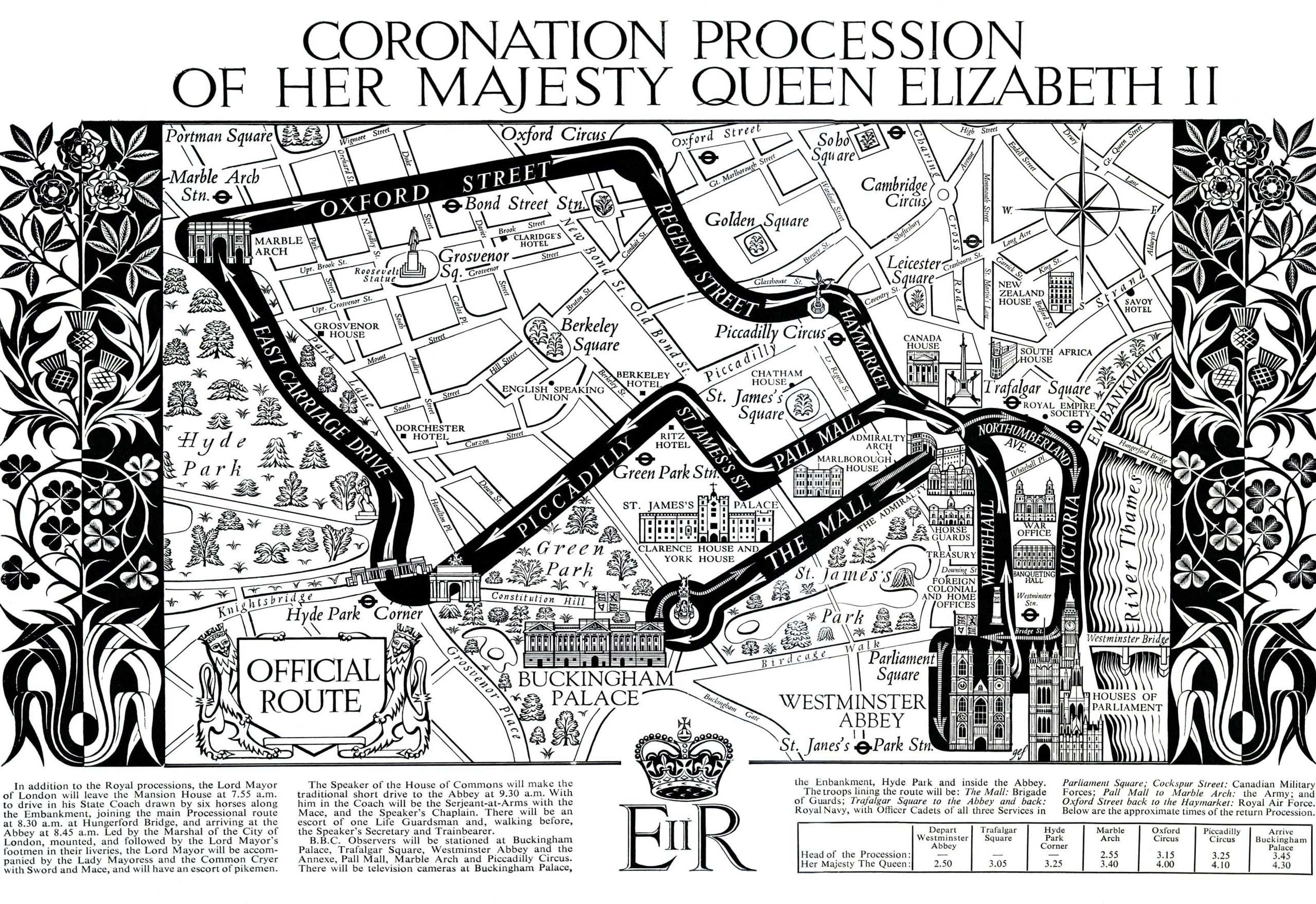
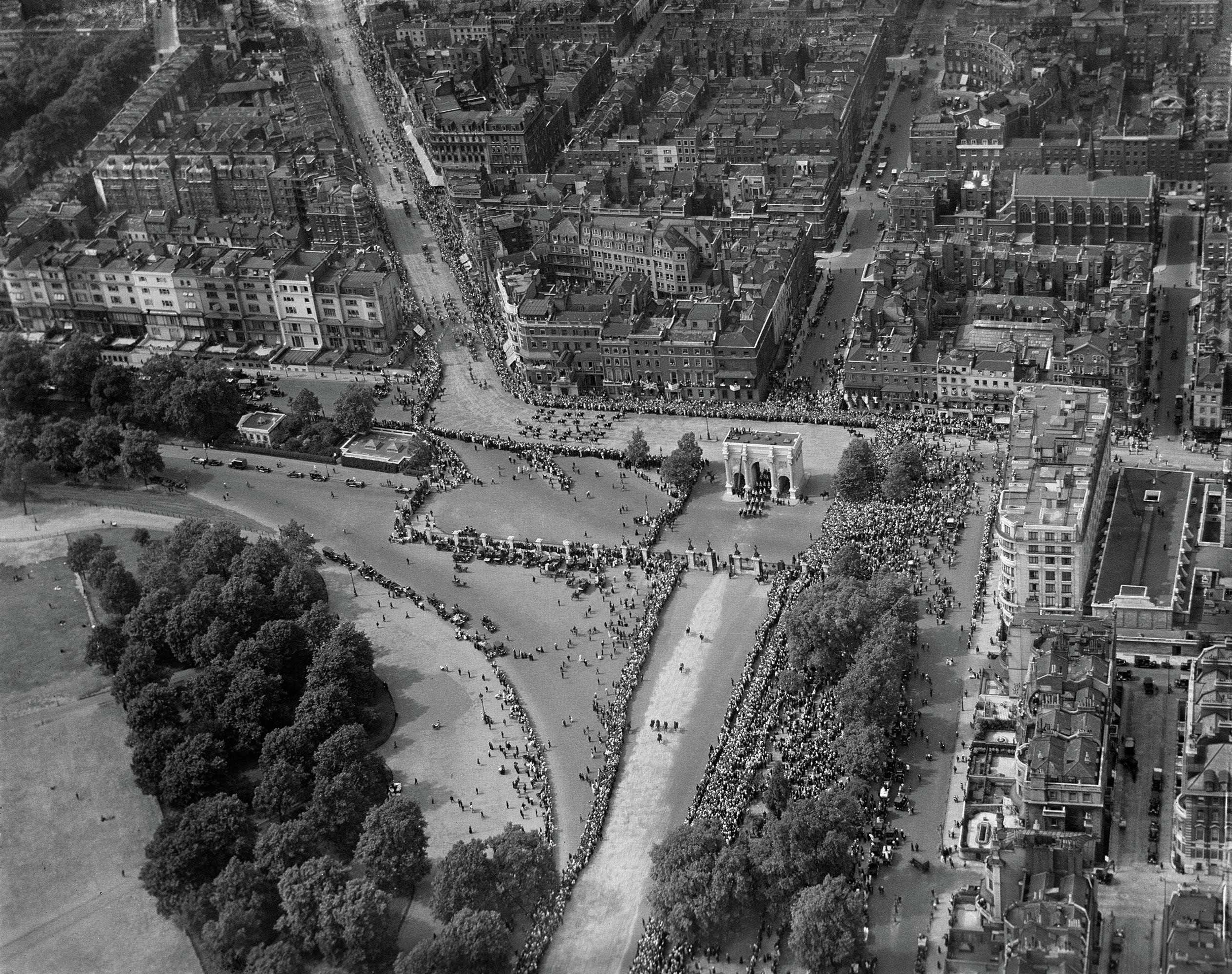
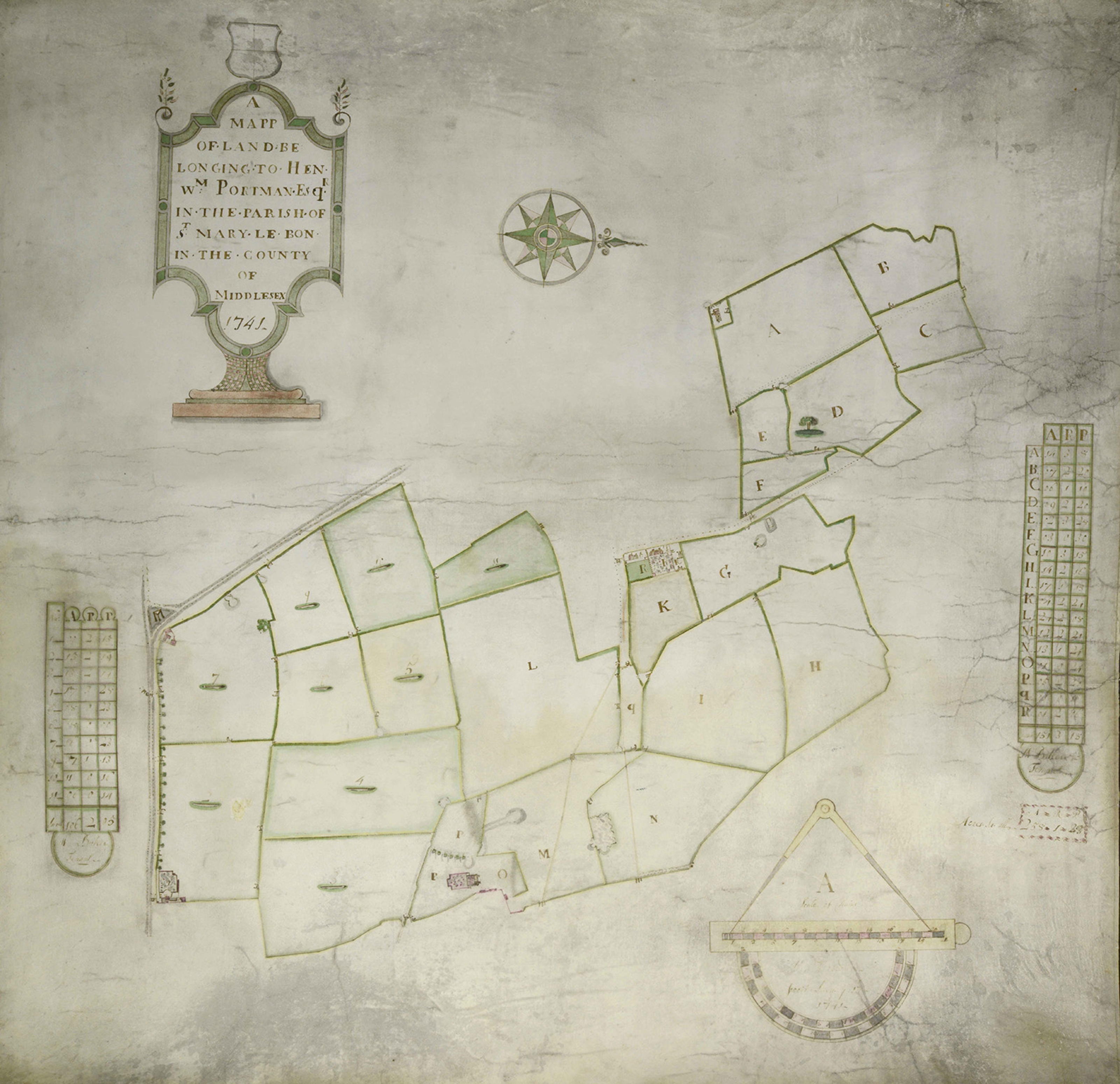
Image Credits:
Alamy Stock Photo, Marble Arch BID (website) HMSO London, Marble Arch BID (from "The Story of Marble Arch" booklet) © Historic England, Portman Estate Archives