Revitalising the Heart of London Area

Preparing a historic urban centre for the future

People standing on the steps of a monument at night.

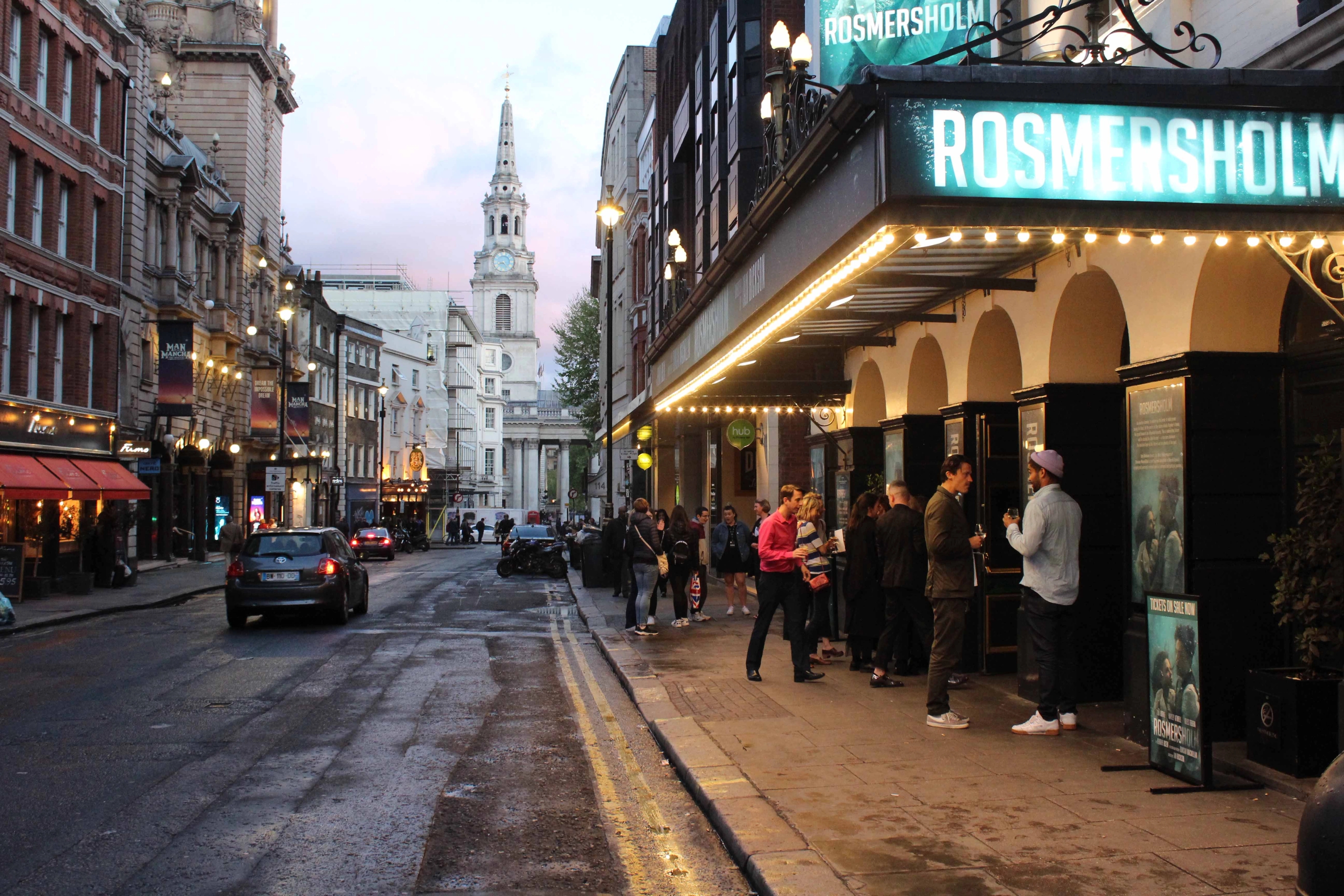
The Heart of London spans the West End from Green Park to the borders of Covent Garden – a layered quarter defined by contrasting architectural styles, historic townscape views, a thriving creative culture, and an animated cluster of evening and night time activity. Its intricate street network serves as a critical route for vehicles, pedestrians and the public alike.

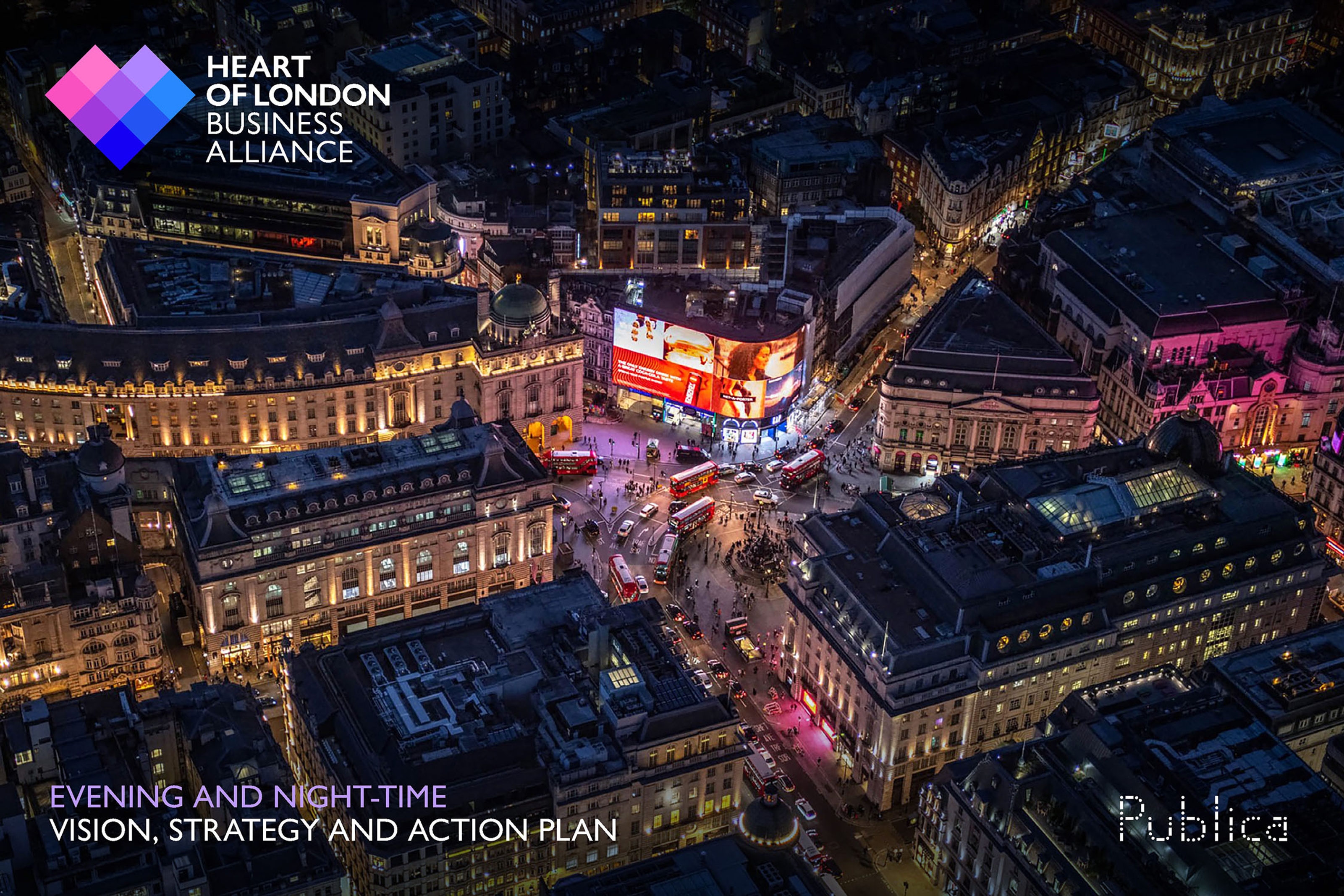
To strengthen and shape this character, Publica developed three ambitious strategies for the Heart of London Business Alliance (HoLBA): the Placeshaping Strategy (2019), the Evening and Night Time Economy Strategy, Vision and Action Plan (2023) and the Arts Quarter Strategy (X). Together, they set out a multi-faceted vision for a high quality public realm amidst a period of significant area transformation.
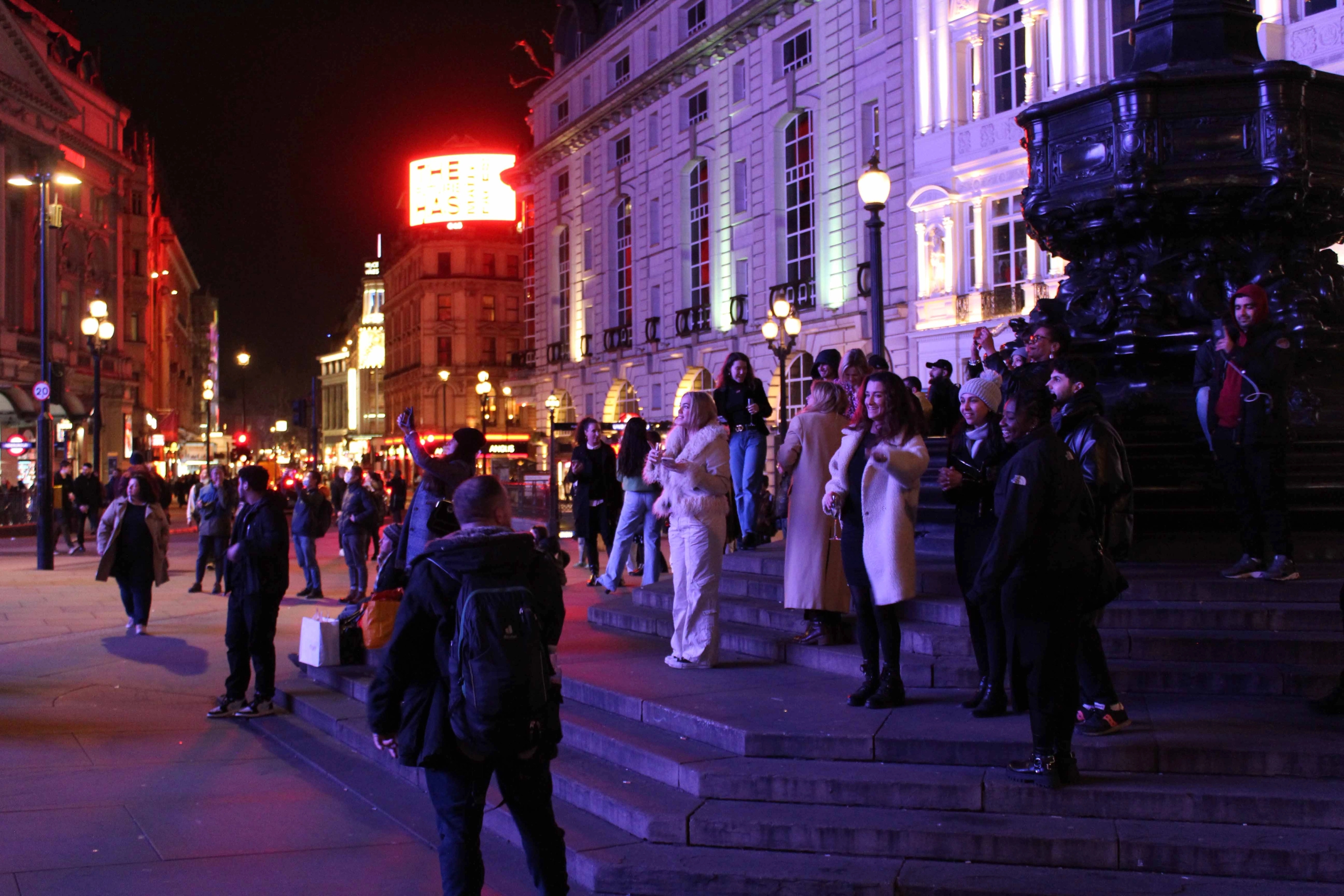
People standing on the steps of a monument at night.
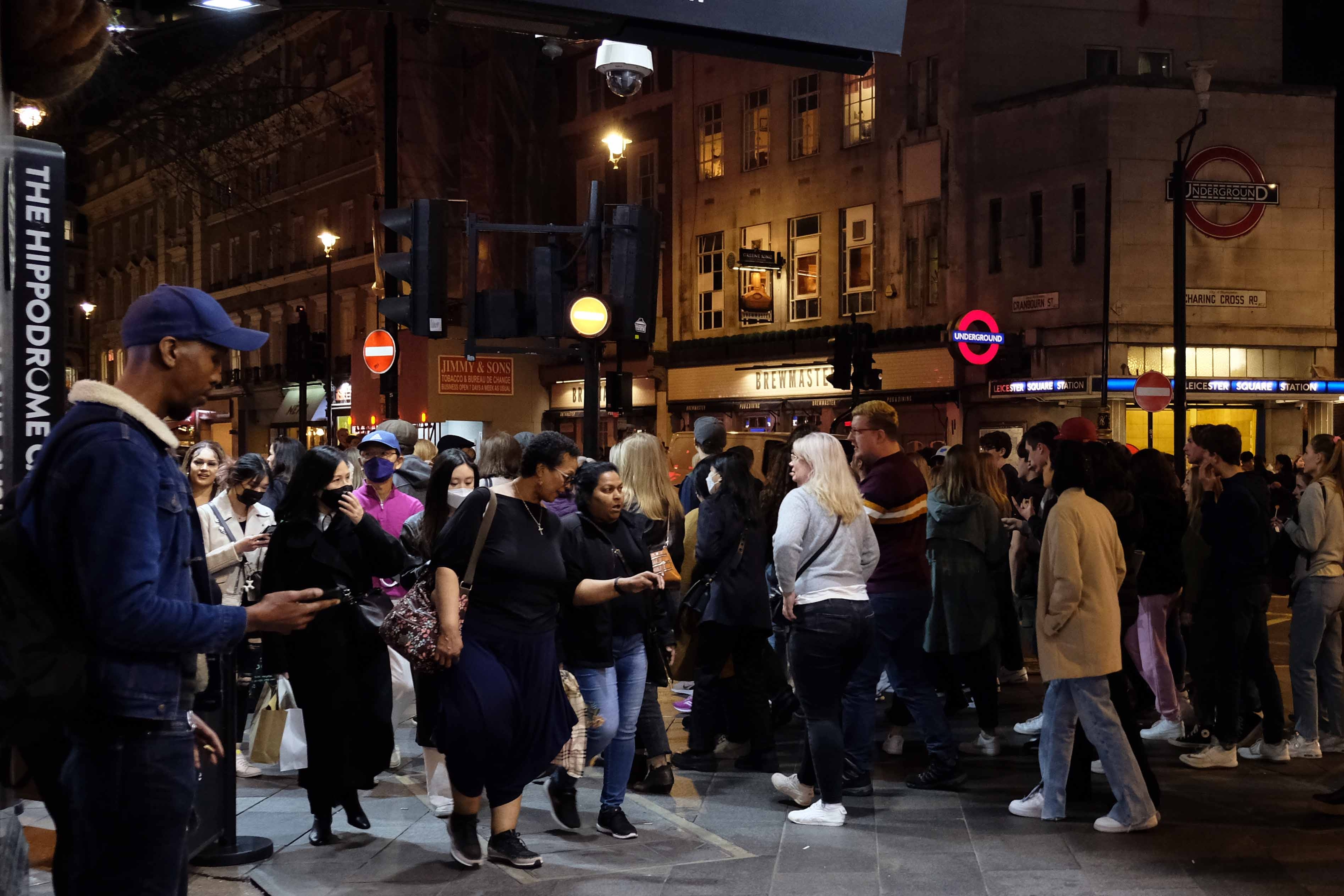
A crowded pavement at night outside Leicester Square Station.
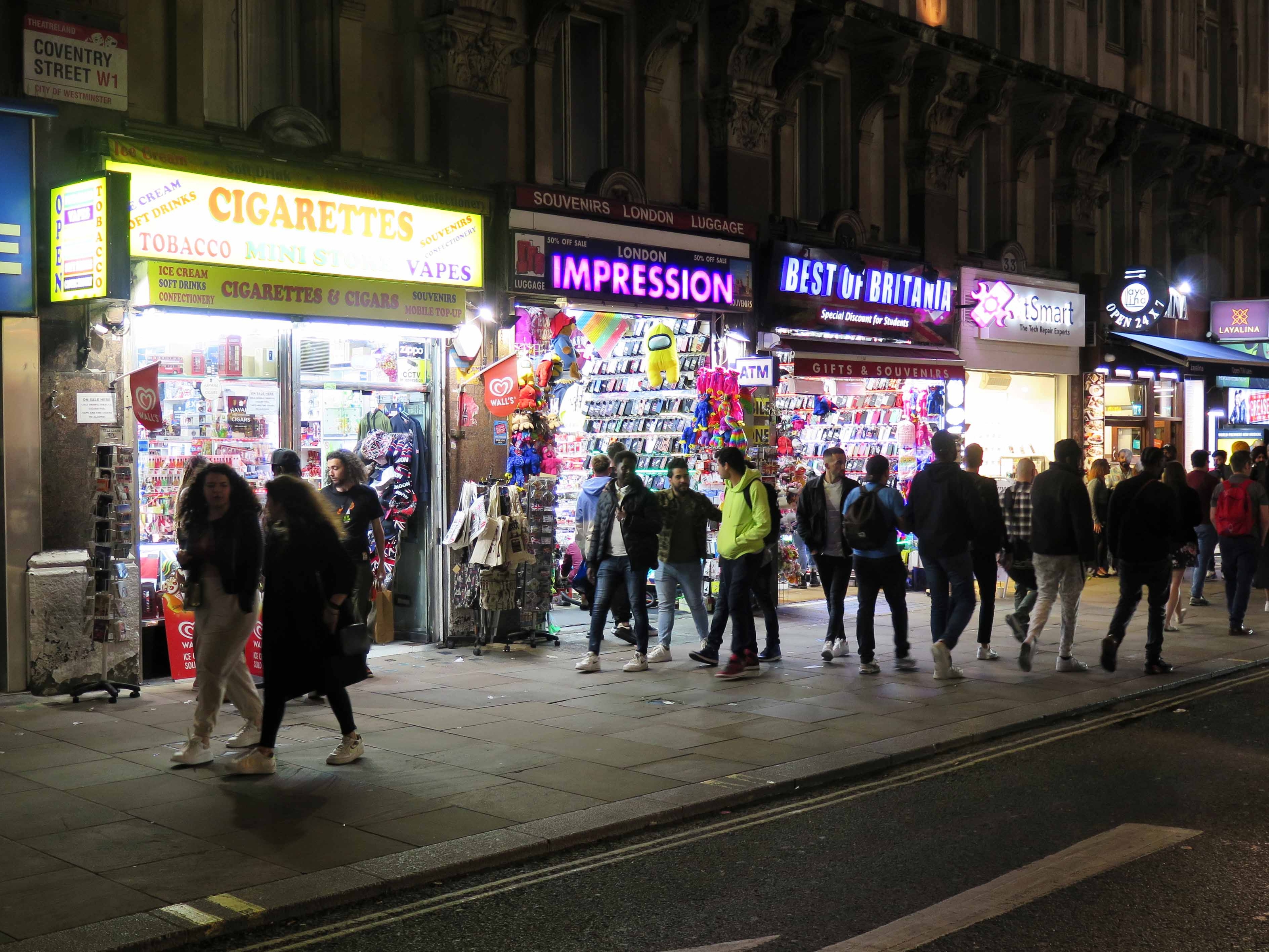
Pedestrians walking past brightly lit shop interiors and signs at night.
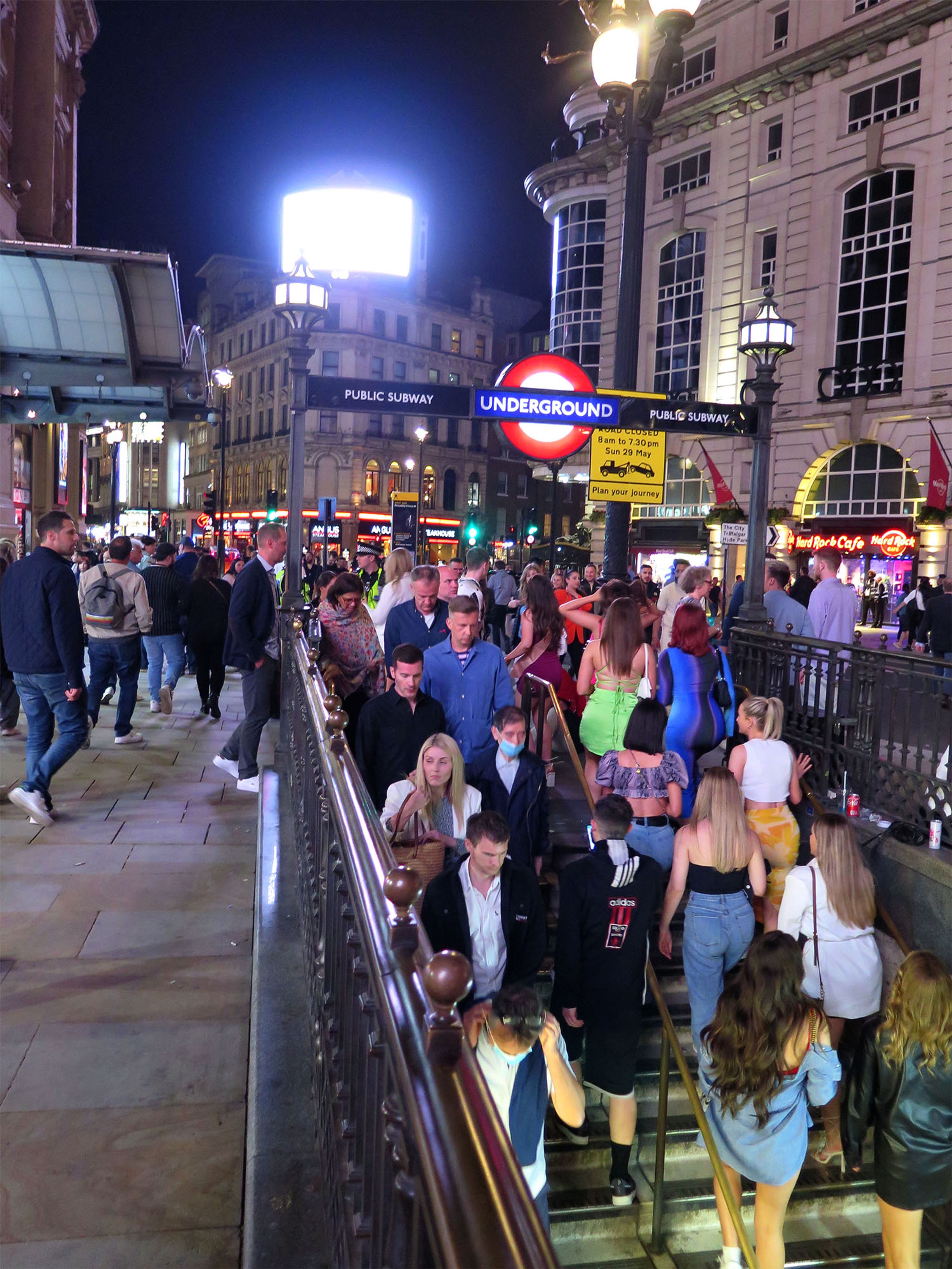
People walk up and down the stairs going into an underground station.
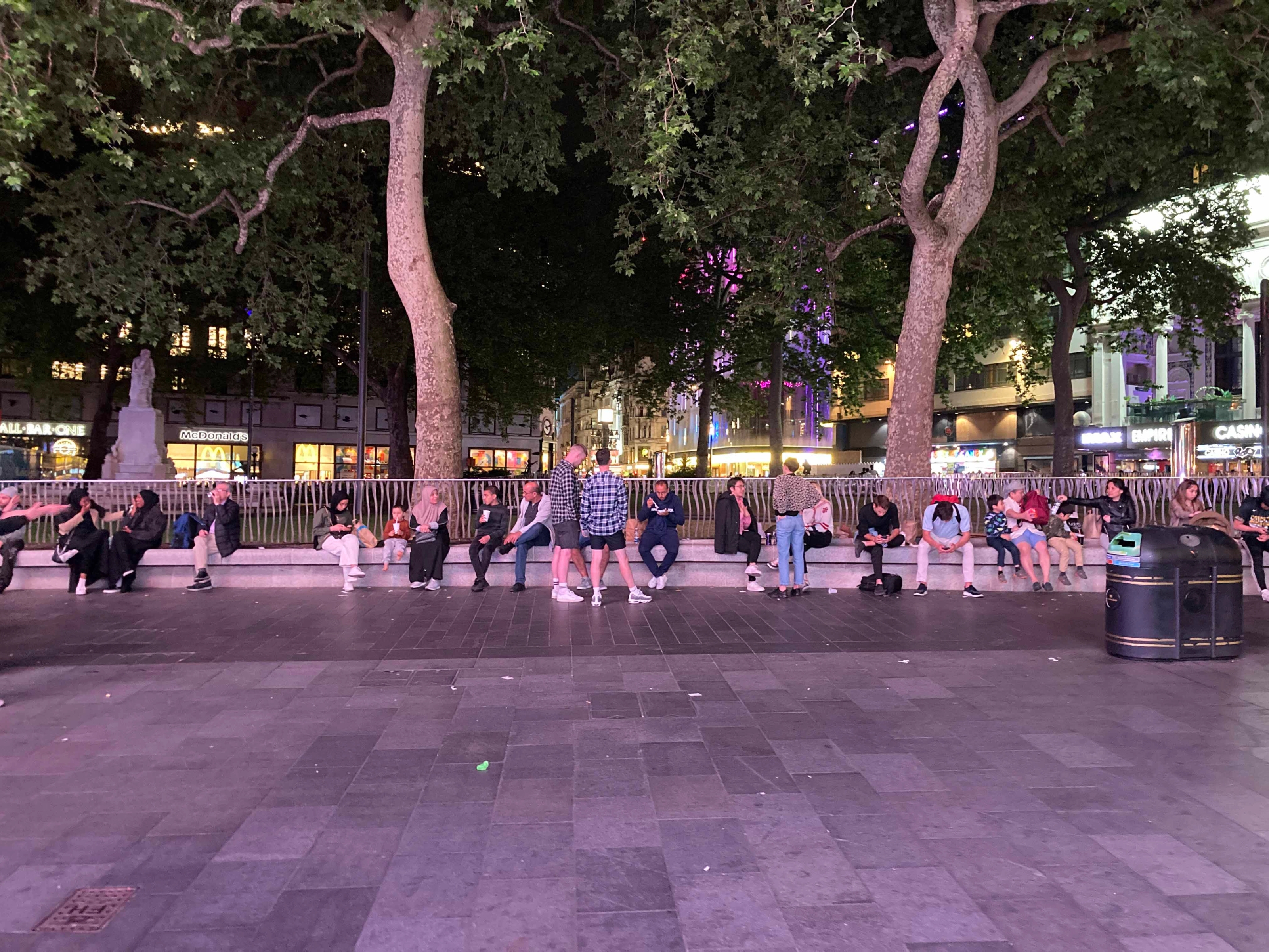
People sitting on a continuous bench around the fence of Leicester Square Gardens.
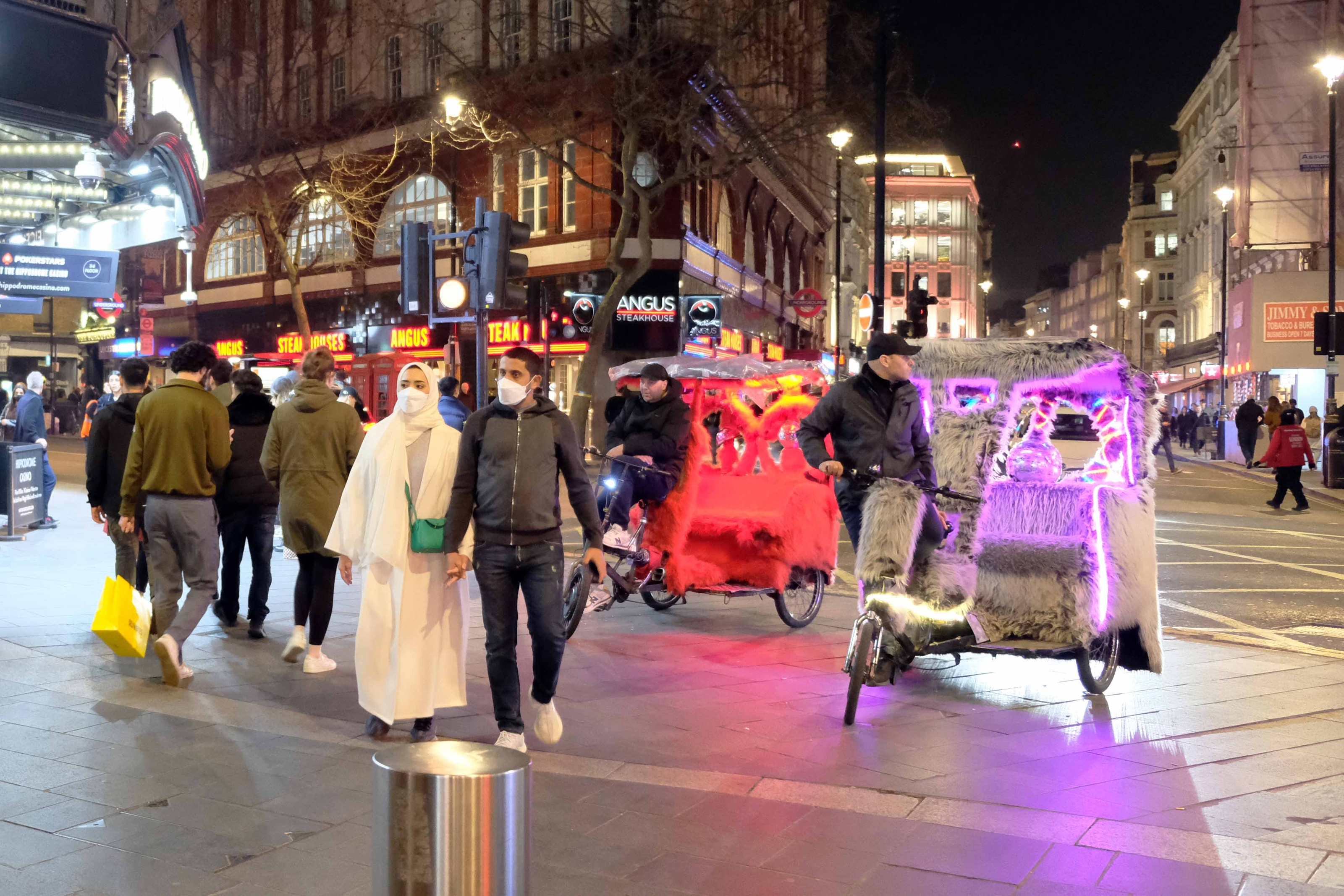
Two colourfully lit pedicabs in an open public space.

Evening and Night Time Economy Strategy, Vision and Action Plan

The Evening and Night Time Economy strategy is a first-of-its-kind for the West End, providing an integrated, and deliverable plan for this iconic part of London between the hours of 6pm and 6am. It sets out how the area can reach its full potential as a more inclusive, safe, accessible, and dynamic place for those who work, visit, live, invest and run businesses here.

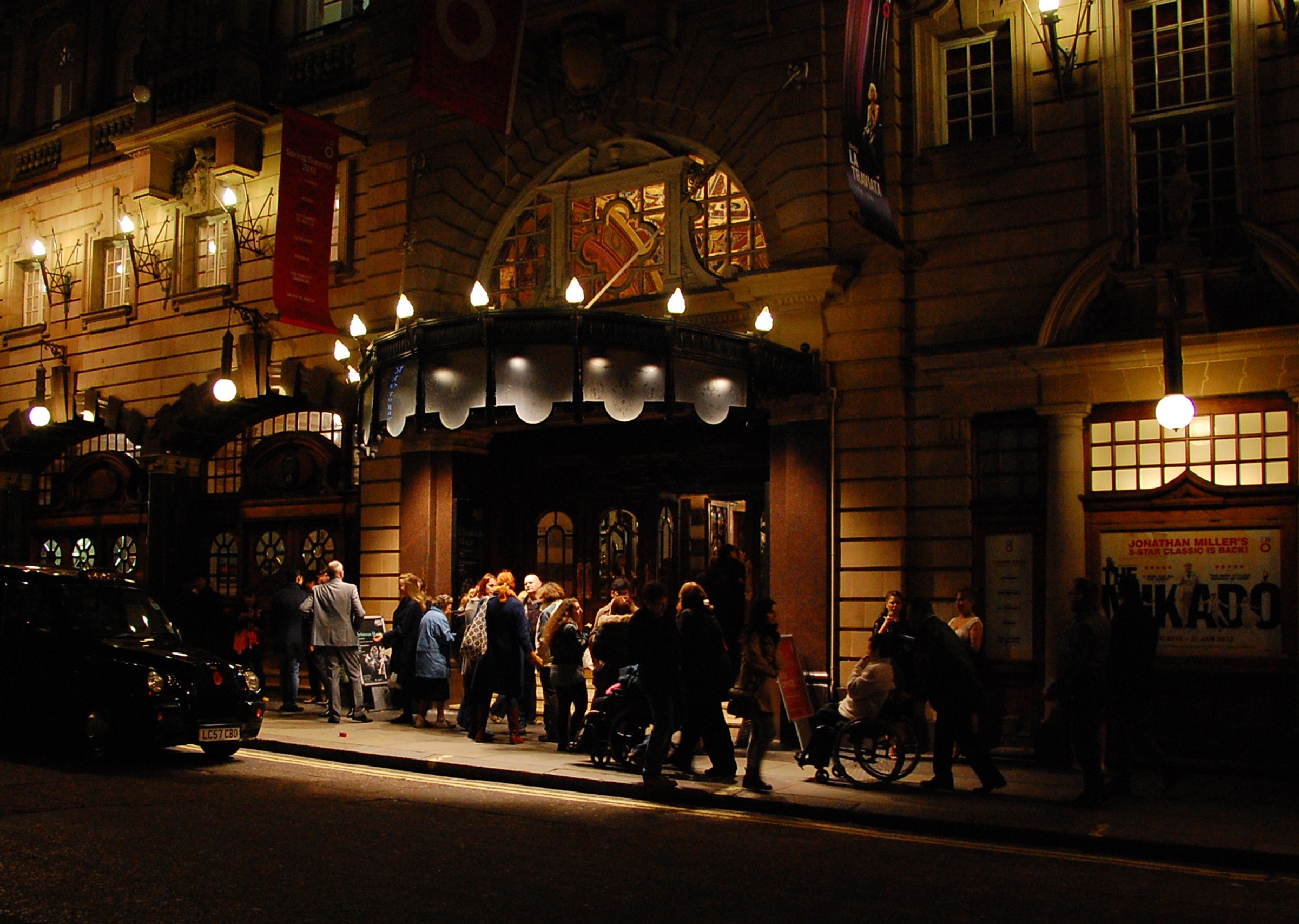
The Heart of London area is already renowned for its night time culture of theatres, music venues, restaurants and clubs. It is an economically vital part of the city, and despite covering just 6% of the wider West End footprint, it contributes £4.9 billion to the UK economy. The evening and night-time economy accounts for 20% of that figure, half of which is driven by the cultural sector alone.

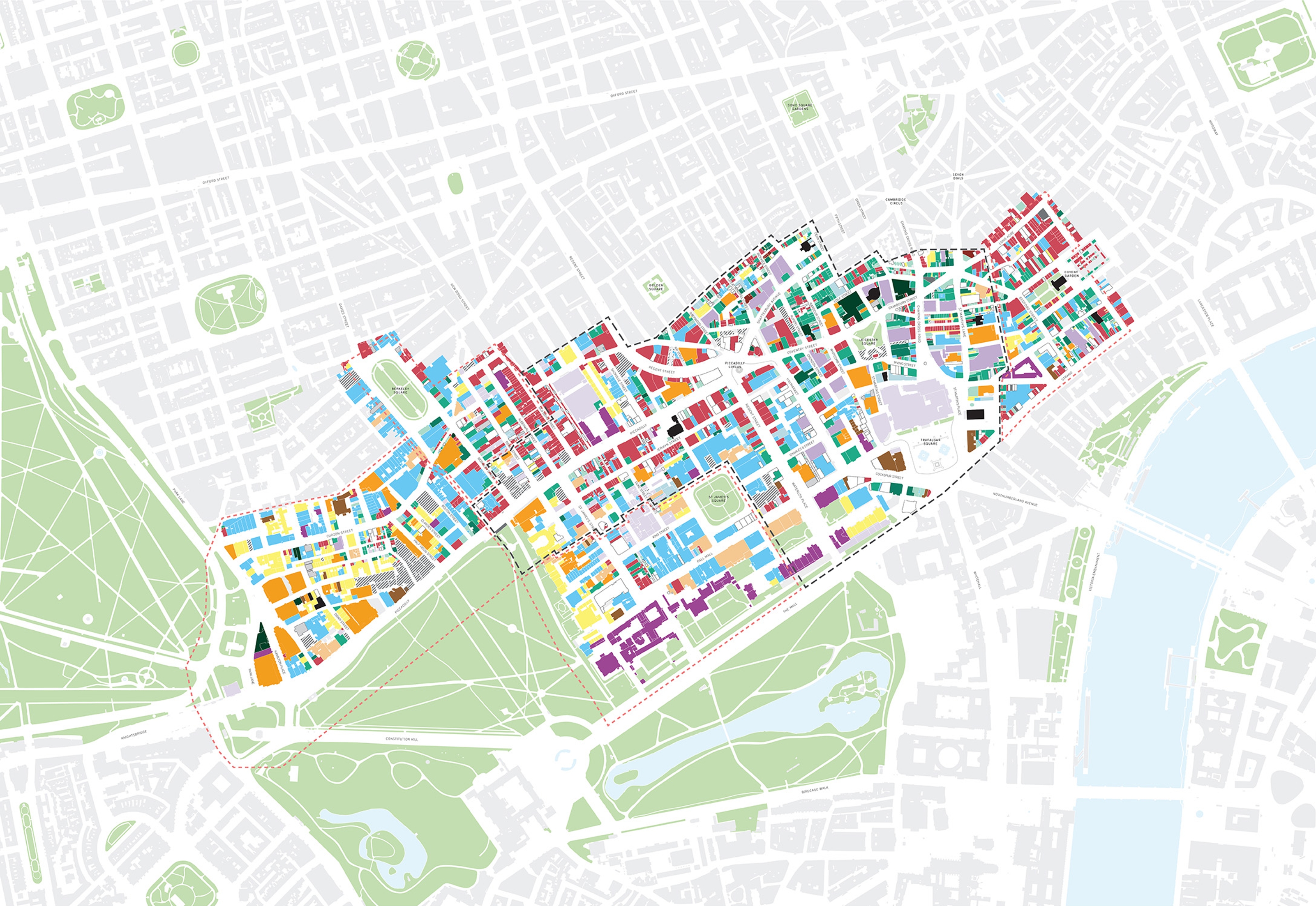
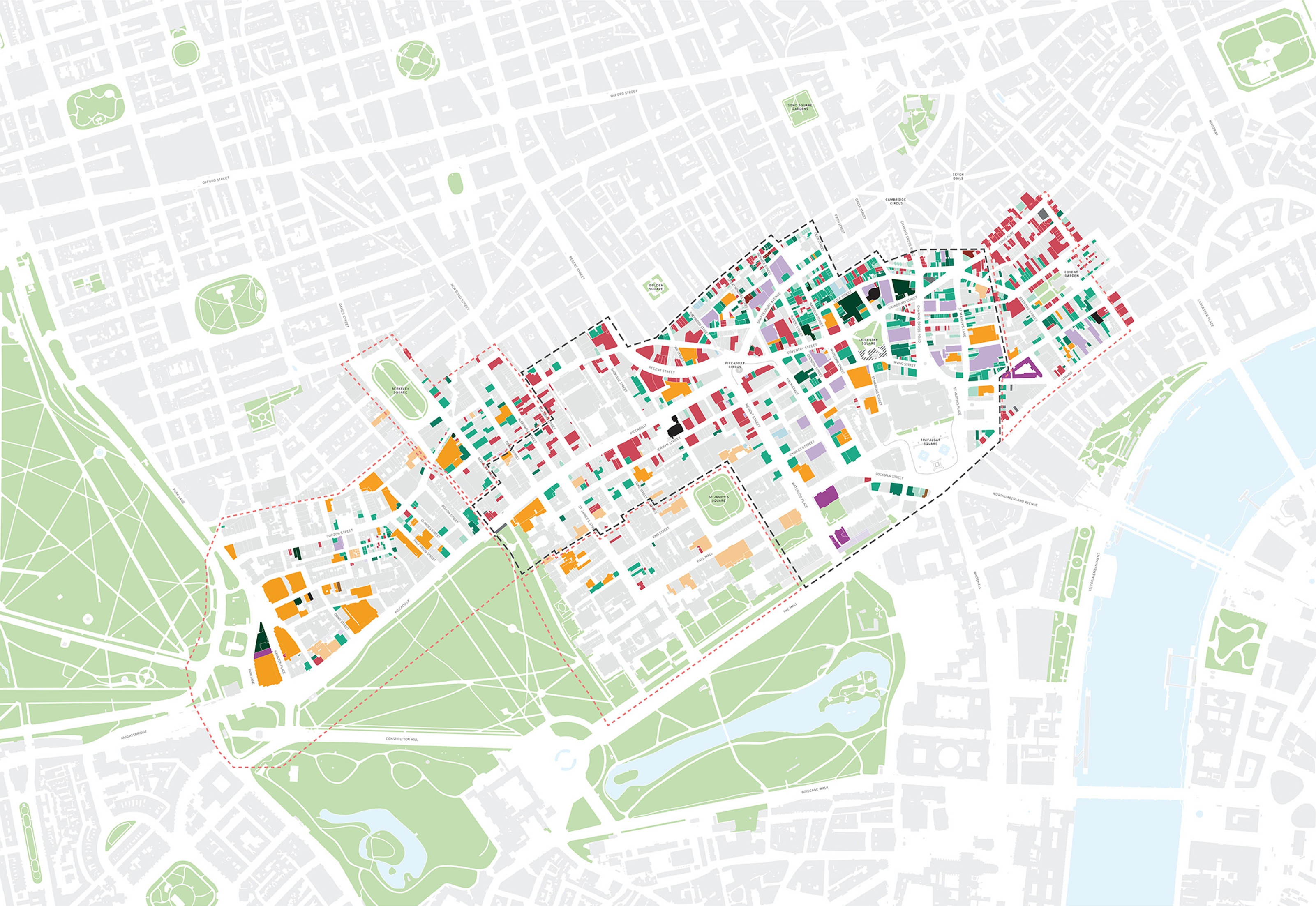
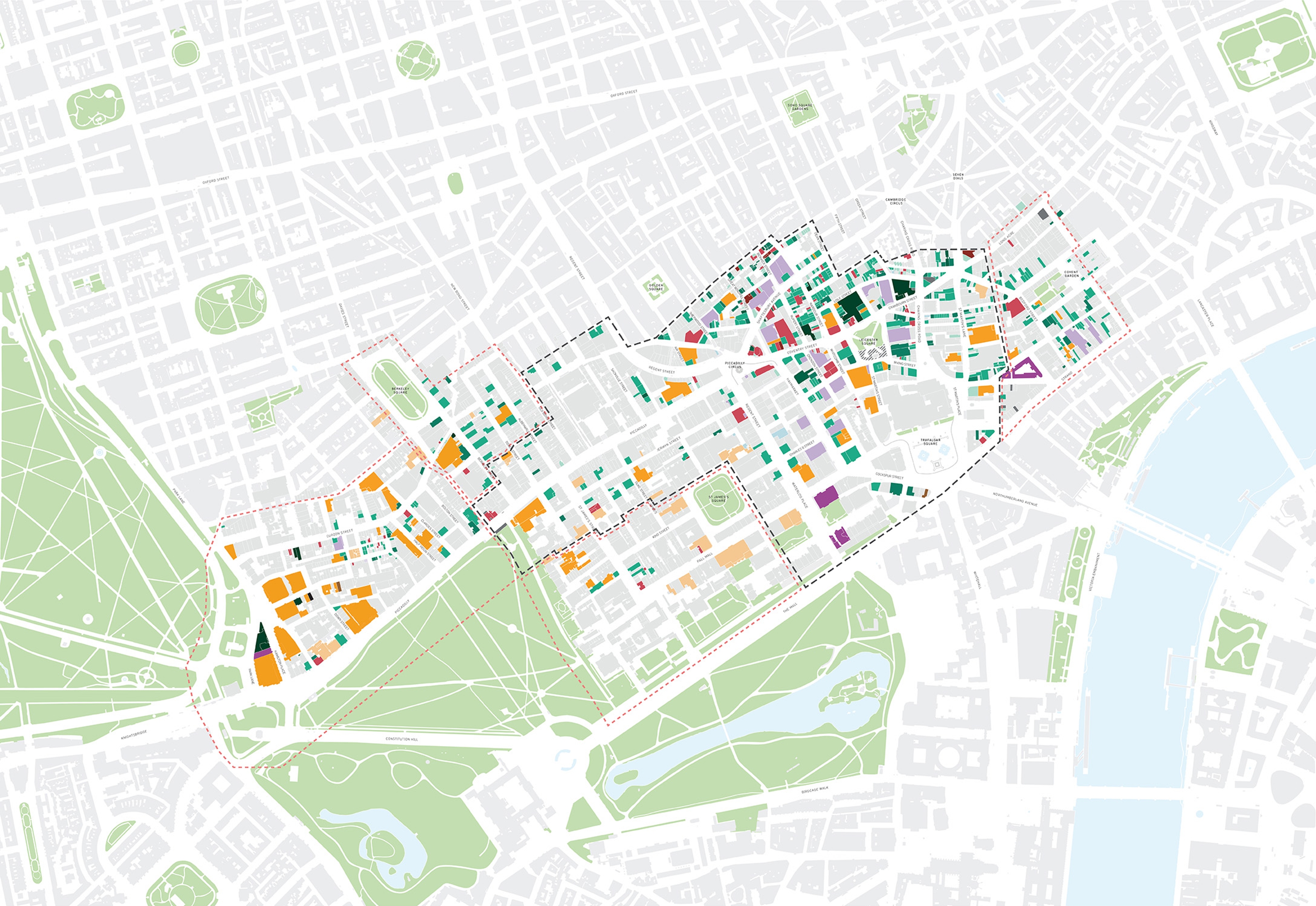
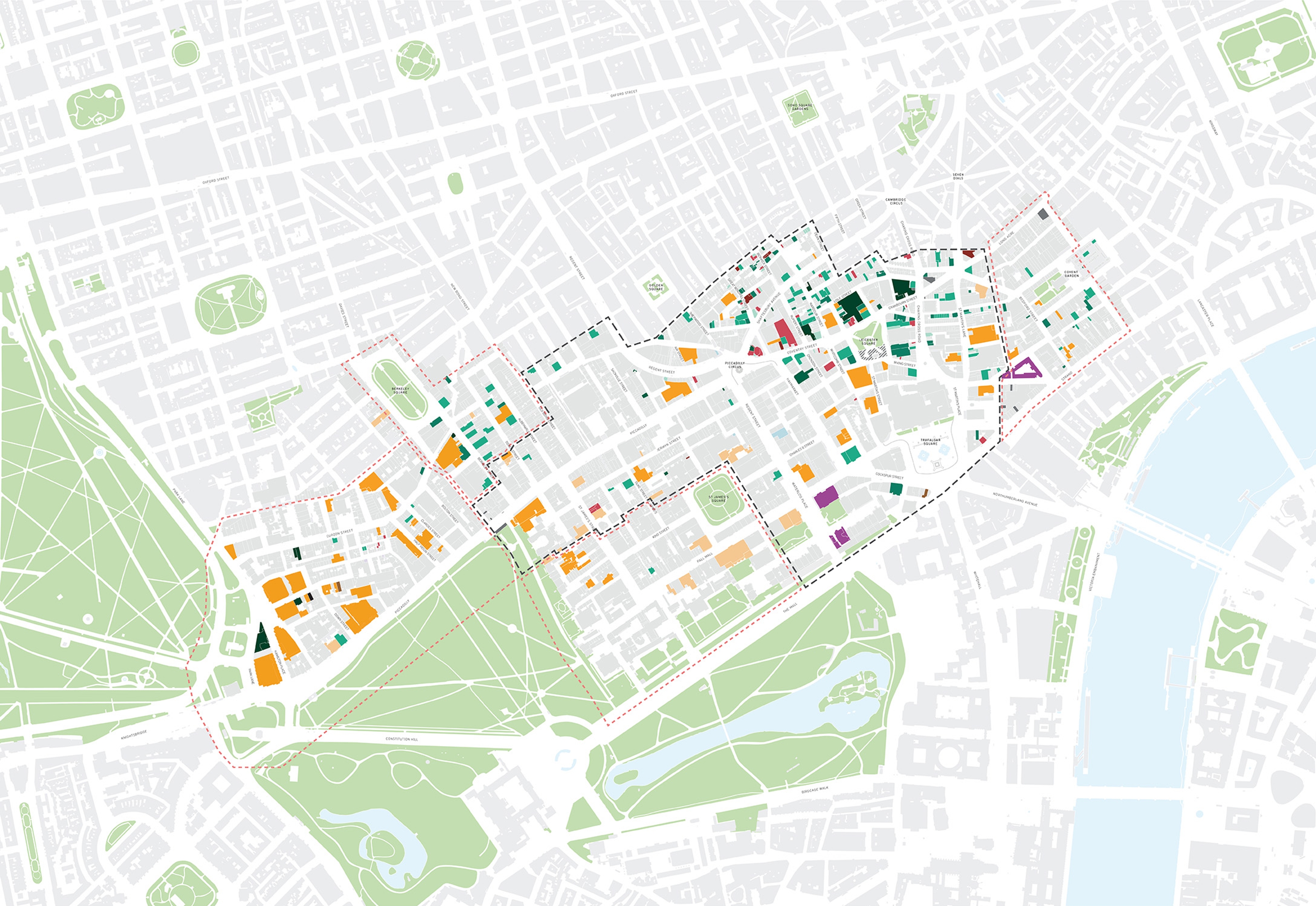
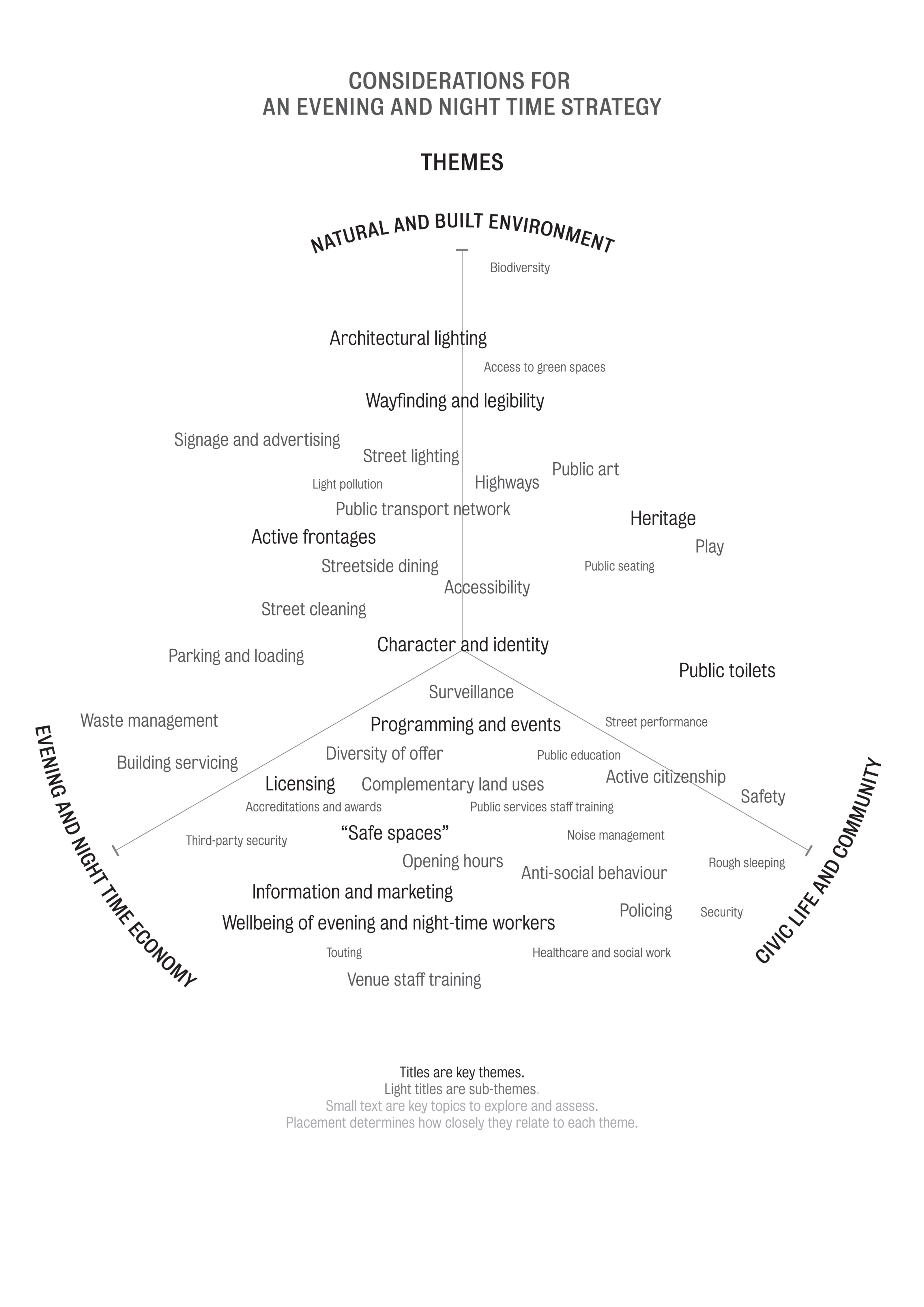
Building on Publica’s earlier Placeshaping Strategy, and Future City’s cultural strategy, the work Is underpinned by a comprehensive evidence base: street-level land use mapping, opening hours analysis, and a photographic survey, alongside a review of policies and strategies, including recent GLA publications and international precedents. To shape the action plan, the team lead a diverse engagement process, drawing insights from virtual roundtables with stakeholders, a panel of international experts and a series of targeted industry meetings.

Map of the Heart of London area with land uses colour-coded to show the mixed uses in the wider area.
Map of the Heart of London area with land uses colour-coded to show only the businesses that remain open on a Saturday from 6pm to 9pm.
Map of the Heart of London area with land uses colour-coded to show only the businesses that remain open on a Saturday from 9pm to 11pm.
Map of the Heart of London area with land uses colour-coded to show only the businesses that remain open on a Saturday from 11pm to 3am Sunday.

Land uses:
Mixed uses in the wider area

Client: Heart of London Business Alliance
Collaborators: Futurecity, NRP

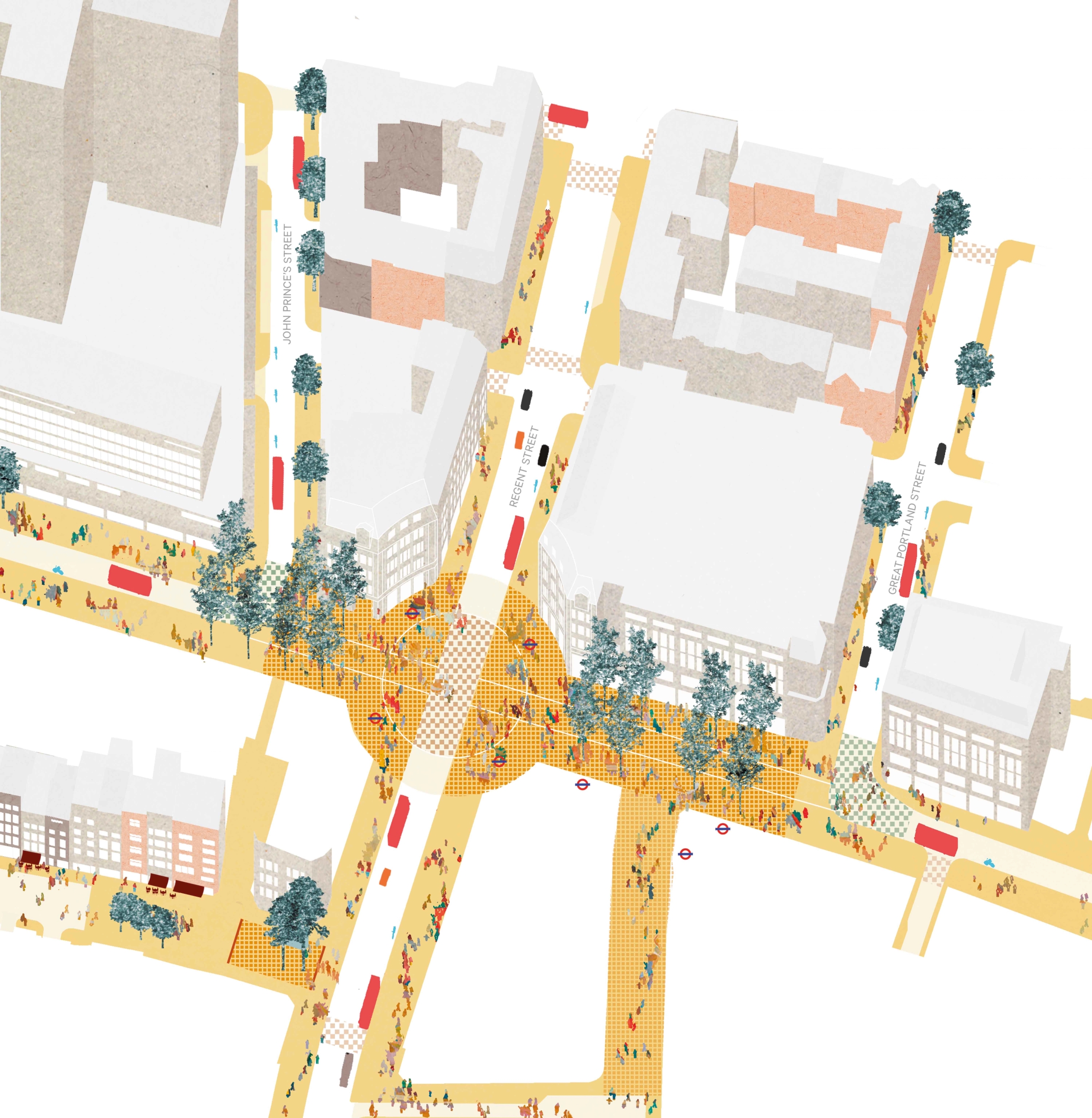
The Arts Quarter strategy promotes the City of Westminster’s plans for an inviting and original public realm, a series of cultural hubs across the borough and creative spaces to encourage the growth of cultural, community and commercial activity.

The strategy identifies scope for investors to harness London’s and the globe’s creative energy within a tight-knit district of often overlooked commercial and outdoor spaces. A ‘Gallery Without Walls’ approach will animate creative uses of the public realm and cultivate collaboration between the cultural and business sectors.

Publica’s research informed the uses and design considerations for the public realm through an analysis of the needs and aspirations of the on-site cultural partners and of the surrounding community and cultural sector. Through a series of recommended public realm proposals, cultural placemaking opportunities and an occupier curation strategy, the strategy illustrates how increased commercial and social value can be delivered for the benefit of everyone who lives, works or visits the West End.