Right to the Streets

Enabling active travel and lives for women and girls in Trafford

Right to the Streets is an initiative working towards reducing violence against women and girls in public space by creating inclusive, active streets in Trafford. Made in collaboration with Greater Manchester Moving, it asserts that everyone has a role to play to make our public spaces more safe, joyful and welcoming. This is critical to enable healthy, happy, active lives for all.

To reinforce this vision, Publica devised and piloted a whole-systems approach to generate sustained change toward safer streets for women and girls. By adapting our individual behaviours, these changes ripple outward, shaping social networks, challenging institutional mindsets and influencing broader cultural beliefs. By testing, learning and acting together, communities can reshape their physical environment and the policies that govern it. Through engagement at every level of the system, it becomes possible to enable systemic change. This approach now forms the foundation of the Campaign for Inclusive Cities.

An illustration and infographic with separate drawings of people with description in bubbles below.

Whole-system approach

This programme enables people to act joyfully and confidently around topics that can feel distressing and complicated. It is amplifying what is already working in communities to develop actions that reflect their own needs, strengths, and passions. We couldn’t be prouder to have contributed to and learnt from this incredible community in Trafford.

Ellie Cosgrave, Director, Publica CIC

Drawing on insights from Greater Manchester Moving and Publica’s gender safety expertise, case studies and academic articles, a literature review of 19 case studies outlines core principles and challenges in gender inclusive urban design. It offers a framework for the programme’s workstreams and highlights the power dynamics that intersect diverse experiences of urban life.

The review is structured into three themes, presented as a set of information postcards:

1. Living an active life

2. Living a safer life

3. Living where I belong

Games and activities were produced to empower project partners, designers, planners, policy makers and the wider community with in-depth knowledge to understand public space through a gender lens. Using challenge statements and tools, they:

  • Teach key definitions about gender, inclusion and the built environment
  • Identify challenges, and new practical and conceptual connections between themes
  • Highlight tools to find solutions to practical challenges
  • Illuminate how people’s backgrounds may influence and limit the solutions they choose
  • Explore visions for safer public spaces

The games were tested with different audiences through a series of workshops to listen and learn from participant’s lived experiences.

Making a difference to women, girls and gender diverse people’s lives requires a collective effort to keep this conversation alive. It means continuing to listen, to learn from each other and to adapt our behaviours and decisions accordingly. The resources developed through this work will continue to help make tangible strides for change on the issues that restrict the freedom of women, girls and gender diverse people. With this, we can create streets and spaces where all women and girls, and gender diverse communities feel safe, feel they belong, and can be active.

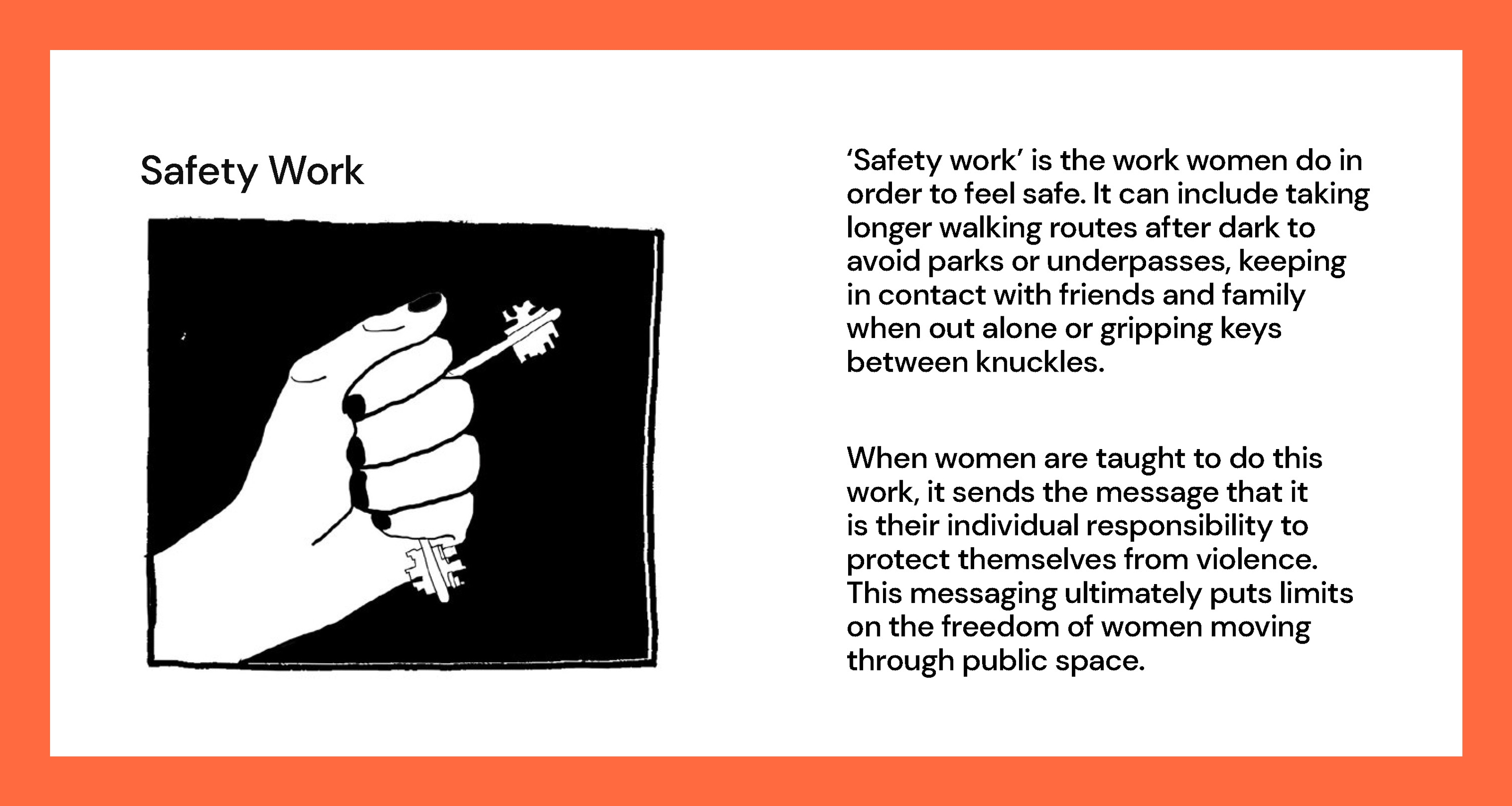
Illustration of someone holding a key protectively in their hand with some writing titled Safety Work.
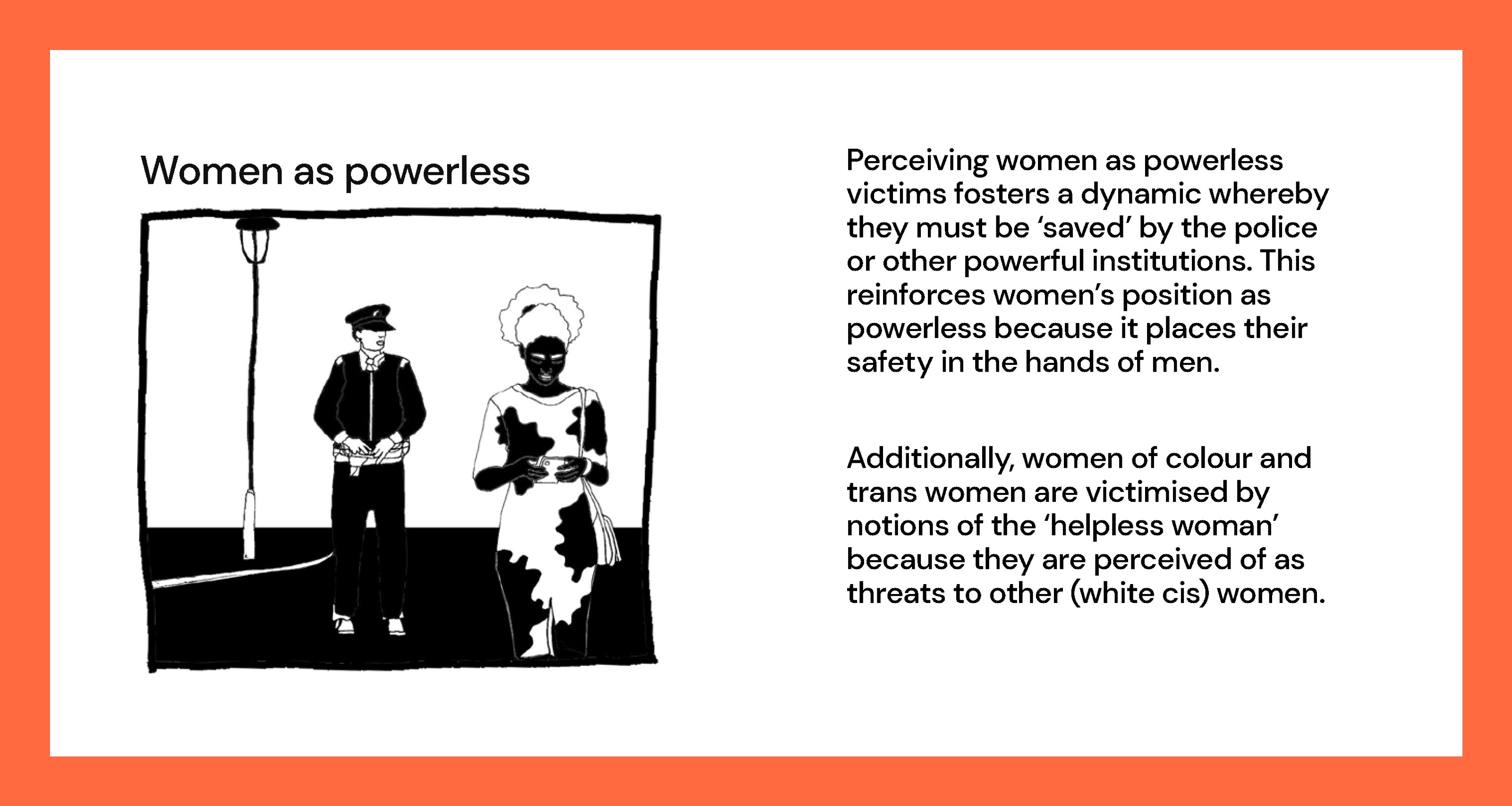
Illustration of a police man and a woman with some writing titled Women as powerless.
Empty box and title 'I belong when…'
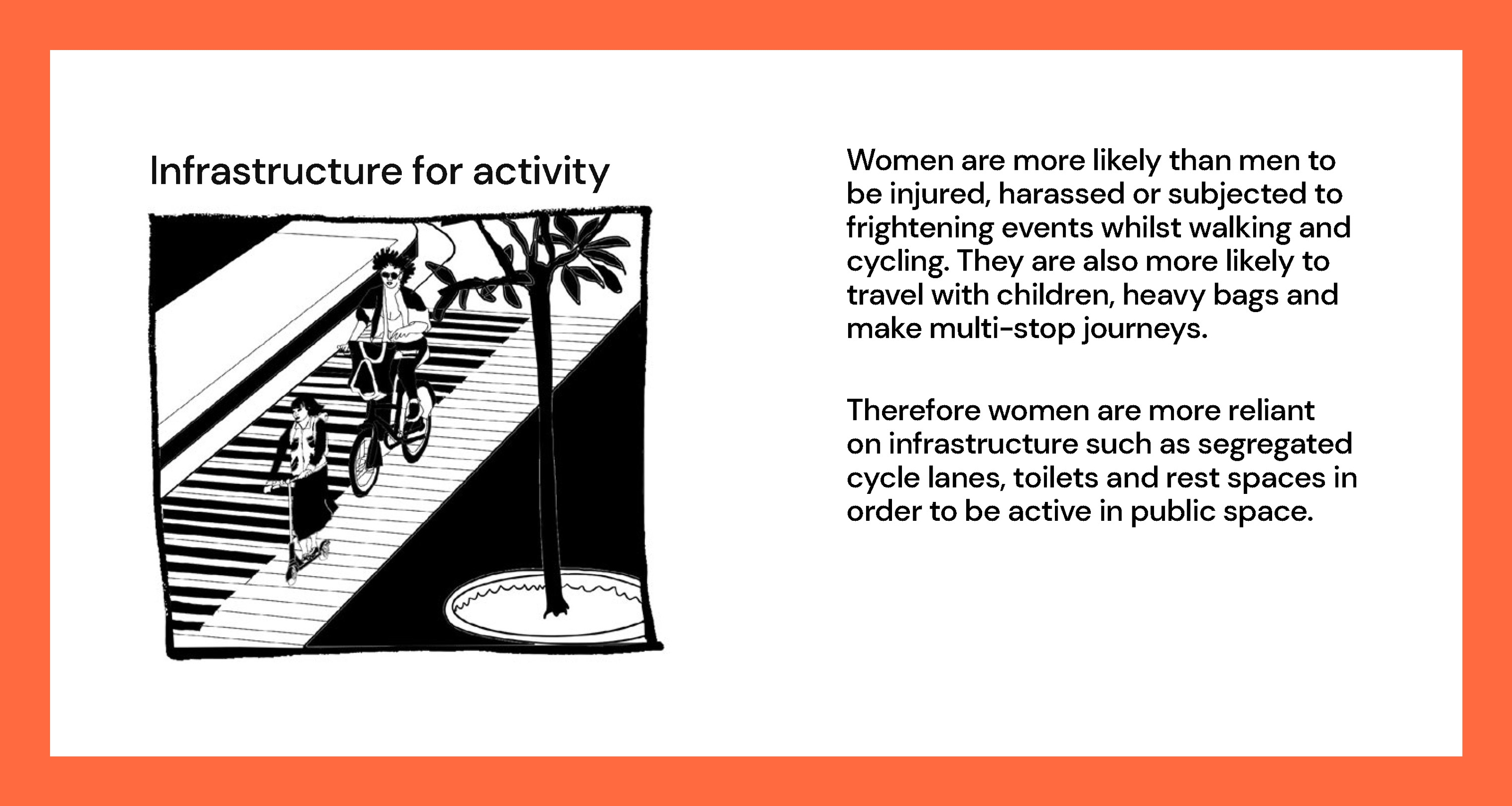
Illustration of two people cycling over a piano with some writing titled Infastructure for activity
Illustration of some feet on a skateboard with some writing titled Gendered Sports.
Empty box and title 'I am active when…'
Illustration of a woman doing a headstand with some writing titled Beauty Standards.